Showing posts with label queer. Show all posts

Friday, 15 September 2023

Rainbow Seas in Maritime Museums: group summary


There's no doubt about it. Most maritime museums  could do with representing aspects of seafaring life that have hitherto been marginalised. That includes the ways LGBT+ seafarers used voyages as a exceptional opportunities to explore new identities and relationships. 

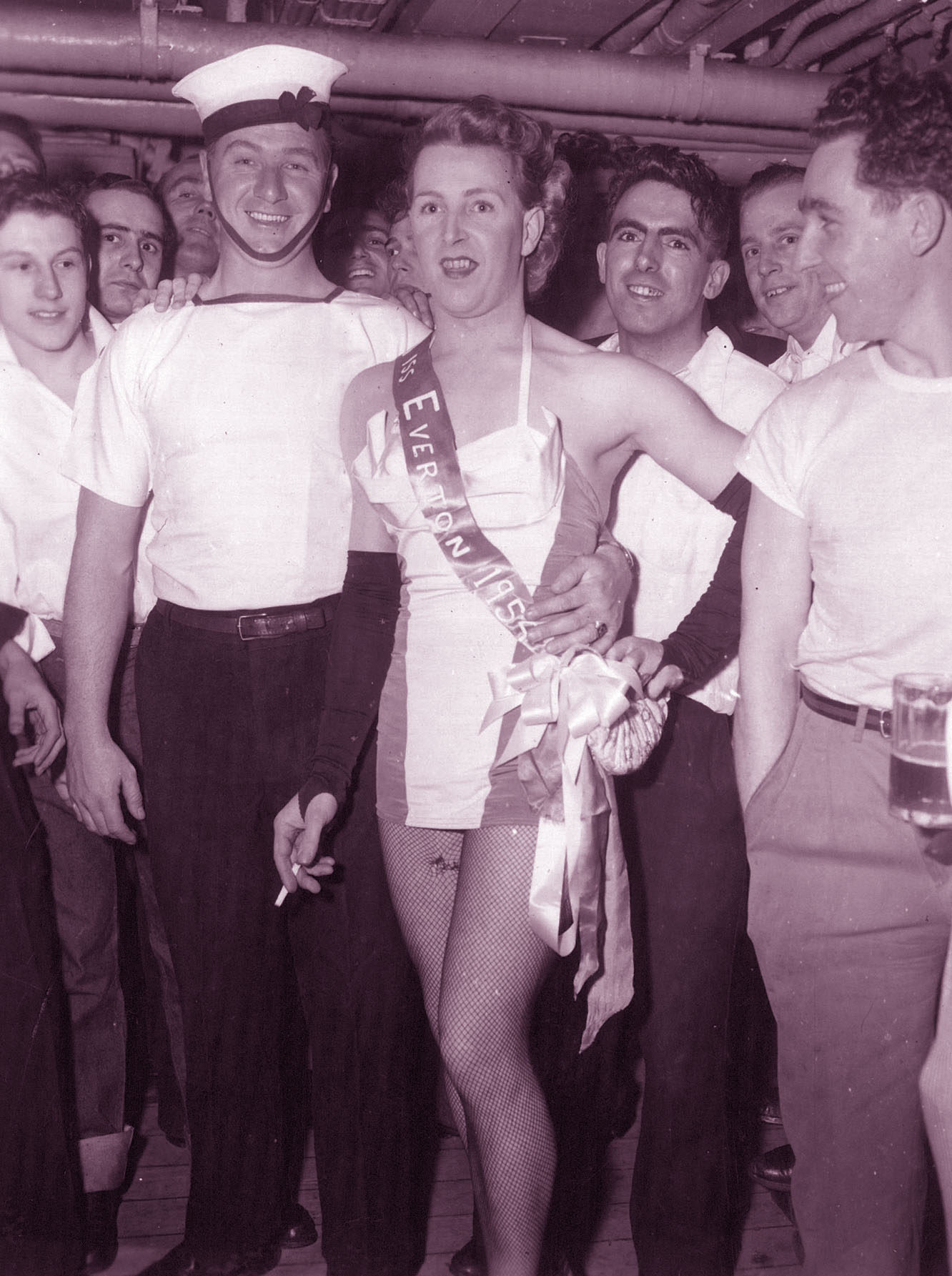
On some ships you could go beyond heteronormatvity. However, it took a while before seafarers could be seen brandishing rainbow flags at Pride (see above). Now there's modern visibility and inclusion, but the history is still under-visible. 

Since 2005 a number of museums in Euope, and two in Canada have put on special temporary exhibitions focused entirely on gay life at sea. See the main images of Victoria, BC, exhibition, right.) 

Other museums arrange events for LGBT+ History Month every February.

Curators and community outreach staff who work in this area are often trailblazers. They seek hard-to-find artefacts, struggle to be diplomatic, and sometimes face homophobic responses by visitors. 

Having experienced and supportive mates helps. Friendly peers share advice, explore, get inspired by others' ideas and endlessly seek to do better. 

The Rainbow Seas in Maritime Museums group has shared expertise remotely zoom for nearly two years. This blog is my attempt, as chair, to summarise it as I see it. And I do so in the hope that others with join in.

Describing a group that is evolving all the time is not easy. But these common FAQ's will help put you in the picture.

1.What does it do? Works informally via 90-minute meetings over Zoom to ensure the diverse history of LGBT+ life on ships and in ports is better represented in museums.

2. Who's in it? A small group of people in Europe, but with speakers from other time zones when possible.  Members are employed by museums, or work with them as expert consultants or interns. Some identify as queer, and some are queer allies. 

3. When do you meet?  About every two months over Zoom, usually on a Friday  morning (agreed at the previous meeting). The meetings are recorded so if you miss one you can still see the video of what happened, and make comments etc by email afterwards.

4. What happens in a typical meeting?  We check in briefly with news about what we are doing. Then the agreed speaker describes their current exhibition work (for example in Bergen 2023, see main image, left.) Or the guest speaker contributes for 30 mins on  a particular area. About 20 mins  chat follows, which usually involves a lot of sharing and recommending. 

5, How are meetings recorded? On the agreed platform, e.g. Teams. We do so because we see ourselves as creating something useful we can offer to the future.  

Sometimes I write a reflective diary,. I hope others do too. I circulate mine by email but am not sure anyone reads it!

6. What has the group done?  In 2022, when we began, three members were putting on displays about queer seafarers. Two others had already done so. 

Veterans offered a hand to the newcomers: this was both formal and informal consultancy. A key question was ‘How do we get hold of evidence?’ The answer: 'By appealing to older seafarers to come forward with artefacts and oral testimony and see themselves educators of newcomers.' 

Community participation is seen as invaluable. (Pictured, former steward Charles Traa and friend in foreign port. Charles was proud to help Amsterdam's National Maritime Museum by sharing his photo albums and being videod.)

7. Who are your guest speakers?  Sometimes we invite in speakers from the maritime industry today. That way, historical displays can be made relevant to present times and the future.  

8. What’s next?  It’s hard to know. It seems likely that some members will fall away because, having put on a exhibition focused on gay life, they now have to move on to mounting their next exhibition. It’s likely that they will be less frequent partiicipants, there in spirit but not in person. 

I certainly hope that people working with other maritime museums keen to represent the subject will join in. A dynamic organisation will be shaped by newcomers and new moves, such as rainbow capitalism. 

9. What future speakers do you have lined up? Professor Seth Stein LeJaq will speak at our next meeting, about using early Royal Navy archives. Our group members are always keen to work with local LGBT+ organisations including archives and universities. Luckily most museums offer talks programmes now, and even podcasts,  which continue to expand the positive effects of an exhibition long after it's over.   

And it seems possible that we may work with people in ports about queer seafarers’ use of ‘cottages’, gay brothels, Turkish baths, Seamen’s Homes. 

Antwerp, Australia and the Far East seem to be emerging as possible partners. We will be drawing in historians of queer life who are not necessarily interested in seafarers. Together we can make connections.

10. What are the side benefits of joining this peer support group with all its potential to help research? 

  • maritime museums are supported in being more inclusive (and thereby attracting new audiences)
  • museum workers don’t 'reinvent wheels'. It’s likely that increased international agency and consultancy will evolve
  •  there’s a domino effect: other museums will consider what they can do, even of it’s only expand their archives, not put on a whole exhibition.

11. How to join? Contact me by email in the first instance. Then I will put you on mailing list. 

Reading more 

Start here. For an introduction and recommeded reading see the LGBT+ Sea page on my website: http://jostanley.biz/the_sea_and_lgbt_plus.html

To read the latest on gay sea exhibitions see my articles:
  • 'Rainbow Seas Swelling:', Lloyd's Register Foundation Heritage and Education Centre, 20 June 2022, https://hec.lrfoundation.org.uk/whats-on/stories/rainbow-sea-swelling 
  • 'Museum musings: a cultural update from the world's maritime museums', Nautilus Telegraph,  26 August 2022, https://www.nautilusint.org/en/news-insight/telegraph/museum-musings-a-cultural-update-from-the-worlds-maritime-museums/

Filmed talks by me. 
2023. “Revealing queer maritime history: international museums’ LGBT+ sea exhibitions,” Blaydes Maritime Centre webinar, University of Hull, May 2023. https://www.youtube.com/watch?v=aPqJ-8tRXeA&t=74s
2023. “Entertaining 4 Sanity@sea: Hull's glitzy ship’s steward Roy ‘Wendy’ Gibson and the history of shipboard entertainment,“ University of Hull, Blaydes Maritime Centre webinar, Feb 2023.  https://www.youtube.com/watch?v=mGg9seH4tgg&t=646s
2023. “A Whirlwind Tour of a Jigsaw 1600-2020. 400 packed years of LGBTQI+ maritime history, “ Maritime UK, Pride in Diversity network webinar. https://www.youtube.com/watch?v=nslyxO679Po
2008.  Homotopia. “Hello Sailor,” filmed interview with me touring an interviewer round the Merseyside Maritime Museum version of the Hello Sailor exhibition, 2008. http://www.youtube.com/watch?v=nFhyEGdEAJA


Friday, 6 January 2023

Celebrating Pride in Maritime day 2023. Queer seafarers


Dutch gay seafaring steward from the SS Rotterdam looks at his voyage album, late 20C. He's helping in the Amsterdam Maritime Museum research project, 'Queer Spaces at Sea. Queer culture on merchant ships 1950 - 1980

Celebrating Pride in Maritime Day, Tues Feb 28 2023. This year join in some wonderful opportunities to celebrate queer seafarers and their place in maritime heritage: 

  • exhibitions
  • talks
  • events .

So why not try:

1. Seeing two European exhibitions on now till summer (both with English subtitles)

# Bergen, Norway: ‘Queer Lives at Sea’ https://sjofartsmuseum.museumvest.no/norsk/utstillinger/skeive-sjoefolk/


# Amsterdam Maritime Museum, Netherlands. As yet 'Queer Spaces at Sea. Queer culture on merchant ships 1950 -1980' is in its early stages. 

Bob van de Poll, Curator of 
 Amsterdam's Queer Spaces
at Sea project

Curator Bob van de Poll invites you to:

  • Join in if you have memories. 
  • Read/hear stories. 
  • See the first-ever film of LGBT+ crew reminiscing about the oddly out -and-proud ships' subcultures in those early days.

Queer Spaces at Sea' is part of the wonderful new exhibition, Humans at Sea: https://lnkd.in/eDxTKH55.


2. Helping develop Pride in Maritime Day 

It’s only the second year of its existence. Tuesday 28 Feb 2023. So let’s big it up. And join in the Diversity in Maritime UK discussion at https://bit.ly/PrideEvent28Feb2023.


3. Catching this info, in talks, posts and films throughout LGBT+ history month. I’ll be sharing stories about:

Wendy at his piano in Hull, lifting spirits as he did
at sea.Picture courtesy Harriet Jones. 
# Entertaining 4 sanity@sea:  Roy ‘Wendy’ Gibson: steward, Falklands Conflict hero, and Hull’s answer to pianist Liberace 

You can hear about people - especially queer seafarers - who raised shipboard morale by making music and theatre. 
Discover how the exceptional gay-affirmative sub-culture on late 20C ships enabled some LGBT+ people to boost their mental health despite gruelling homophobia ashore. 
Show-biz style fun kept you sane at sea! Watch this space and social media for updates.

Comparing Europe’s queer maritime past 
New stories are emerging of Norwegian, Scandinavian and Dutch LGBT+ seafarers’ lives at sea. 
Compare revelations of below-decks fun and work, love and tourism, on late 20C ships of different countries. Watch this space and social media for updates on venues and dates.


1968: Yes, gay seafarers were aboard seemingly the queerest Dutch ship, Rotterdam, with two other ships of the Holland-America Line (Maasdam and Ryndam) at the Wilhelminakade in Rotterdam


For a roundup including Canada's exhibition on gay seafarers see also https://hec.lrfoundation.org.uk/whats-on/stories/rainbow-sea-swelling


Friday, 7 October 2022

Norway - gay seafarers' history is revealed


Queer seafarers and their history are revealed for the first time in a bi-lingual  exhibition opening on 28 October. In Norwegian it's called 'Skeive Sjofolk'. Skeive tarnslated as 'skewed'.

Follow it on Facebook: https://bit.ly/skeiveBergen 

The maritime museum in Bergen is displaying this past as part of Norway's 50th anniversary celebrations of the abolition of a law that criminalised gay sex

Bergen is Norway's second largest city. The port was founded in 1070 and  still plays a major role in Scandinavian shipping.

Several exhibitions about gay seafarers have taken place: in Oslo; Liverpool then touring; and currently in Victoria (Canada) and Amsterdam.  I was co-curator of the  Merseyside Maritime Museum exhibition  (see pic) and continue to research the subject.

Bergen curators Gry Bang-Andersen and Bård Gram Økland asked veteran seafarers about the period 1950-1980

They acknowledge 'The ship was a workplace, but also a local community where feelings, friendships, intimacies and sexuality were expressed and suppressed. The community on board was strictly hierarchical, masculine and heteronormative.' 

Gry and Bard have found that 'on some ships, homo-erotic and homo-sexual relations existed ....[These included] relationships between men who did not identify as queer, and between crew members of different ranks, although mostly covertly.'


3 KEY POSSIBILITIES

I'll be comparing this Norwegian pattern with that of other countries.  So far 3 key things I can say are:

1. DIFFERENT. No other nation's seafarers seen to have had had the kind of out, camp and proud subculture that evolved on British ships, especially passenger ships, 1945-1985. 

But certainly many US catering staff on ships were out, as the late US researcher Allan Bérubé  (pictured) found. See his videod talk about intersectionality in the US Marine Cooks and Stewards Union:“No Red-Baiting, Race-Baiting, or Queen-Baiting!: An MCSU History” https://outhistory.org/exhibits/show/no-baiting/red-race-queen


2. THEATRICALITY.  The camp, funny and showy British pattern may be connected with the very humorous theatrical tradition on both merchant and royal navy ships, and indeed in home entertainment on land. 

On many long voyages it was normal to put on rumbustious crew shows where men dragged up, including grotesquely: singing, dancing, and impersonating divas like Ethel Merman, Judy Garland, Dusty Springfield and Barbra Streisand.


3.NEW YORK,  AUSTRALIA  & SOUTH AFRICA. Relatedly, a lot of frisky camp activity happened on ships between the UK and its former colonies. 

Gay-tolerant P&O and Union Castle vessels were reputed to be the obvious place for a gay man to seek employment as a  steward. This clear 'go-to' pattern generated increasingly large and confident gay shipboard communities - as many as 70% of catering employees on ships were gay, say some. Success begat success. 

I wonder if Norwegian shipping companies - with their different destinations and clientele - were not magnets in the same way. Certainly Goteberg researcher Arne Nilsson found that the majority of gay Swedish seafarers sailed on Swedish America Lines to New York, not other destinations. 

See Arne's book (in Swedish, pictured) and his ‘Cruising the Seas: Male homosexual life on the Swedish American Line, 1950-1975', Queer scope articles, SQS, [Suomen Queer-tutkimuksen Seuran Lehti], vol 71, January 2006, http://www.helsinki.fi/jarj/sqs/SQSNilsson.pdf.

QUESTIONS

Bard and Gry's questions include: 

  1. How might seafarers see their temporary home?
  2. What were the limitations and possibilities that GBT+ men found on board? 
  3. How did “non-queer” seafafers regard the few queer shipmates who were out? 

ANSWERS 

The answers to these in the UK situation are:
  1. Home? As 'queer heaven', a wild hedonsitic haven which was the most permissive and supportive community/industry avaiable at the time, by far.
  2. Limitations and possibilities? A place where ratings and catering pesronnel could be as out and outrageous as they liked. Deck officers had to be closeted.  
  3. “Non-queer” shipmates? Some became contingently bisexual or simply 'men who had sex with men (MSMs) but did not see themselves as gay. Most were acceptant of gay men, if the gay man did not insist on pursuing him. Homophobes, outnumbered, sought a transfer. Women crew usually enjoyed 'sisterly relations' with the gay crew. It was a pleasure to be friends, not the object of heterosexual objectification.  


I hope you enjoy the exhibition. 

What a good reason to take an autumn holiday in Bergen

Sunday, 6 February 2022

Celebrating the first ever Pride in Maritime Day on Mon 28 Feb 28, 2022.

Celebrating the first ever Pride in Maritime Day on Feb 28, 2022. https://www.maritimeuk.org/events/events/pride-maritime-day/ 

Let's join with all the LGBTQ+ seafarers and their allies ashore and afloat to mark this fine day. Maritime UK is leading the initiative. 


Grabbing a quick taster

I'm proud to have been part of revealing the brave and tragic history. If you want a quick taster about the challenging gay maritime past that led to this now-proud present, try: 

# Seeing my zoomed whirlwind tour talk about this history, step by step, 1600-2000 at bit.ly/queermarhist. It includes cross-dressed women whose relationships may have been non-heterosexual, like shipwright Mary Lacey (pictured below). 


# Browsing my reading list of books and articles about queer seas, at  www.academia.edu/37107492/Queer_Seas_bibliography_doc

# Reading my (lite, illustrated) introduction to the subject at http://www.jostanley.biz/the_sea_and_lgbtqi.html 


Exploring further 

I'm celebrating 20 years of researching, writing and explaining about this subject. This period was prefaced by me thinking for over two decades before that, 'Somebody's got to write up this history. But it should be written by a gay seafaring man, not me.' 

Finally I went ahead. You can see what I've written up by looking at: 

# the "Hello Sailor" exhibition that Merseyside Maritime Museum mounted, then toured. See the Youtube tour of it at bit.ly/HomotopiaHello 

#  the seminal book Paul Baker and I wrote:  "Hello Sailor, https://www.proquest.com/docview/2132054178/$N

# my blog on gender and the sea: https://genderedseas.blogspot.com/

You can help by joining in

Do you want to take part in a rainbow seas history network, exploring the diverse maritime past? 

A few of us in maritime museums throughout Europe are thinking of getting together for this purpose. 

If you want to talk about joining in please contact me privately via my website, www.jostanley.biz