Showing posts with label amahs. Show all posts

Friday, 17 March 2023

My Mike Stammers Memorial Lecture 2023: Ayahs as "worker-passengers"

Race, gender and class: ayahs and amahs as “worker-passengers” in British ships 1890-1950

I'm honoured to be giving the Mike Stammers Memorial Lecture  2023.  It explores maritime  equality, diversity and inclusion. Understanding ayahs helps us understand an overlooked intersection of race, gender and class on ships in the past.

WHERE? Merseyside Maritime Museum, Liverpool 

WHEN? Wed 24 May at 5.30pm BST.  

COST? It's free. No need to book.

What am I saying?

New ideas about equality, diversity, and inclusion are enriching maritime historiography. Exploring transnational movement by a significant group of mobile subjects -- Asian nannies -- enables us to gain fresh understandings of how intersectionality worked on early 20C ships.  

Thousands of Indian ayahs and amahs  (Japanese, Chinese and Malaysian nannies) travelled round the British empire creating domestic comfort afloat. They were non-kin members of the Raj families they accompanied. (Pic shows ayah and other Asian members of This Durham Light Infantry household).

Voyages changed ayahs.  In gendered, racialized and very hierarchical colonial times these non-white, poorly-educated, female domestic workers gained unusual mobility and motility. 

Conversely, ayahs changed voyaging. For example, segregationist policies and practises led to ship’s architects creating ayahs’ bathrooms aboard.

This talk looks at ayahs and amahs as part of an under-researched group: worker-passengers. They were neither seafarers nor passengers -- but almost fish and 

Such voyagers included maids, valets, bearers and governesses. Like all passengers these servants had paid-for tickets. But for them the trip was not a leisurely interlude; they laboured throughout the voyage for the family who paid for that ticket.

Ayahs' subjective, segregated and exceptional experiences differed from those of the maritime labourers who were directly employed by shipping companies. 

Unlike Lascars  who routinely serviced the vessel, ayahs were intimately connected to their bosses on relatively one-off voyages. In that way they were unlike the white stewardesses who did care work, processing multiple batches of human cargo on repetitious trips.

Ayahs’ own testimony is barely visible. They are usually nameless. 

The quantitative evidence used in this talk includes the freshly-sorted data I have derived from passenger lists. 

This numerical data is triangulated with: 

  • genealogical information about ayahs’ employers
  • varied travellers’ voyage descriptions
  • newspaper reports of ayah-related crime
  • recent interviews with ayahs’ (now elderly) carees. 

The lenses used include those generated by the new international working party on ayahs and amahs. This contextualises ayahs along with today’s airborne chattels, often Filipinas. Such intimate care workers' oppressive conditions are now recognised by activists. (See activist poster).
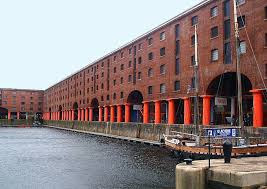


LIVERPOOL ANGLES

Many ayahs sailed to and from Liverpool, including on Bibby, Clan, and Henderson Line ships. 

Ayah Boutflower was one, on the Anchor Line's Roumania. In October 1892 she headed from Liverpool to Bombay. 

Almost certainly she was going to be dropped off in India while her employer, Edith Boutflower (pictured), sailed on to Australia to join her husband, William, there. He was a Seaforth lad made good, who had become a schools inspector in India.  

On the Roumania the ayah's job was look after Edith
and William's four children, including 8-month-old Margaret. Their paternal grandfather was the famous Seaforth vicar of St Thomas's, William Rawson.


The Roumania  (pictured) ran aground in storms off  Peniche, Lisbon. All the women and all 8 children were lost, including the unnamed Boutflower ayah and the ayah of Mrs Elizabeth Burgess. 

Only nine people were saved from the wreck. (See an artist's idealised impression).

Glaswegian Elizabeth Burgess, with baby Arthur, was going back from Edinburgh to join her husband William (pictured),  and their three children.  She'd taken the baby to show her parents, taking a break from Wesleyan missionary work in Hyderbad. 

It's likely that these ayahs had been making their first trip to England and had stayed for a few months with their employers' families of origin. 

Baby Marjorie/Margaret Boutflower had been born in Jersey that January. Her mother may have travelled to Britain from Allahabad, the capital of North West Provincesith, the ayah, to have her baby 'at home' in the UK. 

Expectant mothers sometimes did this, especially if they were frail, older or mistrusted the Indian health care system. Edith Butflower had already lost two children. Maybe she had been supported through that by this same ayah.

CONNECTING TO MIKE STAMMERS

The late Mike Stammers, AMA,FSA, a former keeper of the museum, was someoneI knew.  My mum was delighted to give him many of her photos of the dock road gates at sunset. He would have enjoyed this talk.

I myself am a Scouser, of a Liverpool seafaring family. My great-grandad Peter Quinn, a ship's barber, would have sailed with ayahs. Maybe he cut their hair with the scissors now on diplay in the museum that Mike helped create.


EXPLORING MORE

  • You can read my work about ayahs and ethnic minority seafarers at http://jostanley.biz/ethnic_minorities.html
  • The Roumania history is at  https://www.bhsportugal.org/uploads/fotos_artigos/files/TheSSRoumania.pdf


Tuesday, 29 June 2021

Re-inventing Jamaican nurse who sailed with baby Grace

Esther Niles in the live version of Waiting for Myself to Appear.
Image courtesy of Black History Month 2019

INVENTING BAME HISTORY

What do historians do if they can't find evidence of occluded people? Some invent, judiciously.

This weekend only, you can see on line an interview with the creatives involved in a three-screen immersive film installation on constant display in London's Museum of the Home. https://www.museumofthehome.org.uk/what-s-on/exhibitions-and-installations/waiting-for-myself-to-appear/. It marks Windrush Day, 22 June 2021.

The film installation is based on the imagined 19C story of Grace Belmore Sweeney's Caribbean nurse, who accompanied her to England. 

Grace (1837–1907) later married Henry Martyn Baker (1821–1895). He was the much older chaplain of the Geffrye almshouse. (Pictured)

Initially the play was a 45-minute live one-woman show in 2019. Michael McMillan's commissioned production, Waiting For Myself to Appear, imagines Grace's unknown Jamaican carer, 'Mary Anne'. Esther Niles stars. 

As someone exploring BAME caregivers afloat, I'm using this blog to offer information about Grace's likely voyage. However, brown and black carers' sea crossings are not part of any dramatic production, as yet. 

This show is about Hackney, not the ocean. And it weaves in modern times too.

WHY THIS WOMAN CONNECTS WITH SEAFARING

The real name of this Jamaican worker-voyager is unknown. But - if she was a wet-nurse, as is assumed - she helped orphaned Grace Belmore Sweeney stay alive all the way to England. She belongs to a rarely-discussed category: black and brown women who sailed as care-givers, usually on precarious wages.

Unnamed port in Jamaica 1825, by James Hakewill. National Library of Jamaica


Underprivileged women seldom travelled long-distance before the 1960s, let alone earlier. Try to imagine Scarlett O'Hara's enslaved 'Mammy' landing at Falmouth docks, or Rudyard Kipling's ayah turning up at Victoria coach station. Unlikely! So Grace's care-giver had unusual mobility.

CARERS' PATTERNS

Grace's nurse may well have been of African origin, as so many enslaved Jamaicans were at that time. 

African-origin carers afloat are more rare than needles in haystacks. The better-known travelling ayahs and amahs were of Indian and Chinese origin respectively. (See ayah on a later P&O vessel, below).

Some were wet nurses. That meant their own left-behind babies were going without their blood-mother's milk and missing out on that crucial physical bond, as Esther Niles points out.

Mostly carers were at the upper end of the 20-50 age range. Many had children, who were left behind during the voyage. An unknown number were widows and family breadwinners.

Some care-givers stayed with their employing families and looked after generation after generation. They travelled to new locations with them, for example on furloughs 'Home' or when military sahibs were sent to new bases. The families care-givers had to adjust to being obligatory itinerants in order to keep their job.  


CARERS SAILING WITH BABIES

What was Grace's carer's voyage like? It's not recorded. But there's plenty of contextual evidence. 

She was aboard an unnamed ship, almost certainly wind-powered. It brought her the 4,705 nautical miles to Hackney in the late 1830s, just after slavery was abolished. 

Voyages were so long that some carers weaned the babies in that time, especially if seasickness dehydrated the women so much that they stopped lactating. 

Grace and her carer would have undergone a five-to-eight week voyage, or more. Speed depended partly on the state of the ship, weather, currents and winds.  Going from Jamaica to Britain the winds were kinder than on the Britain-to-Jamaica trips. 

Storm at Sea by Robert Salmon, 1840

She'd almost certainly have travelled saloon class, as she was with a white, not brown, child. They'd have slept in the Ladies' Cabin. Maybe 8-10 others were there, so a carer's job included shushing crying babies to avoid other passengers resenting the disruption. 

If very lucky their ship would have had a ladies-only lavatory (opening into the sea), not chamber pots. The cook's co-operation would have been crucial if Grace had switched to solid food. And sailing with a crew who liked children was always a bonus; carers felt less alone with their burden.  


HANDY

The Museum of The Home (formerly the Geffrye Museum) in Shoreditch is to be commended for putting this unusual story of BAME women in the public eye.

 Hopefully, more early African-Caribbean caregivers' stories will emerge as a result.

Friday, 14 August 2015

Wet nursing on ships: sisterly support and a necessary business


A hot topic today

Breast-feeding other women’s babies at sea. Where in maritime historiography are these lost stories of generosity, of life-saving, of sisterly support -- or, more practically, women’s private enterprise in a monopoly situation, the ship in mid-ocean?
Is it the general lack of work on travellers' emotions,including necessary trust, that means we don't we know much about situations of heightened mutual dependency at sea, apart from during the wrecking of ships and in lifeboats?
I'm thinking about those troubled intense times on voyages when people absolutely have to supplement for each other when (sea- or other) sickness hits. That includes seafarers generously covering each other's jobs when a shipmate is ill or distressed, or ships' passengers looking after the children of mothers too incapacitated to do anything? (This can be taken as a proof of the African adage that it takes a whole village to bring up a child).

The question comes up because wet nursing is a hot topic in the UK this month. Today BBC Radio 4's Woman's Hour focused on wet nursing (http://www.bbc.co.uk/programmes/b007qlvb). Debate has been triggered because a picture of Jessica Anne Colletti (pictured above) breastfeeding her son and a friend’s child went viral. (http://www.express.co.uk/life-style/health/598028/What-is-wet-nursing-how-to-breastfeed-milk-bank-netmums).
Also a survey by Netmums, the website for mothers, last week found one in 25 British mothers are already wet nursing another's baby. Two in five women said they would do so.


Wet nursing at sea in the past

On ships this intimate supplementing happened too. However, the extent is not known because the subject, like menstruation at sea, has been regarded as not quite seemly.
Passengers' letters and diaries certainly make clear that some women on ships helped each other, with child care and especially when ill.
But there's little detail about the physical realities and emotions, so we can only speculate on the meanings of these intimate exchanges.
*
How far did that help extend? It’s partly dictated by the weather.
Wet nursing and seasickness are crucially linked because if nursing mothers suffer badly from mal-de-mer they become dehydrated and eventually stop lactating. At least one in ten people suffer from seasickness, and effective remedies were rare before the 1940s.
No-one would stand by and let a baby die of starvation. Of course shipmates who had copious enough milk would have stepped in. Peer pressure might have propelled them, too, if the child was so very distressed that the crying disturbed the whole ship.
Class relations and custom meant that the family of an elite mother would think it quite normal to send down to steerage for a labouring-class woman to do this job.

Wet nurse saves Manuel Lagos Besteiro’s life
In 1912 when Pepita Lagos Besteiro was returning to Havana from Madrid with her husband and baby Manolo, the six-month-old became so sick that the ship's surgeon pronounced that he would probably not survive the voyage.
But a willing wet nurse was found on board. And, says the family’s website, this unnamed woman (pictured with Manolo) successfully suckled Manolo back to health, ’to the point where it was noted that he had a ruddy complexion by the time the boat arrived in Cuba.’(http://www.emilito.org/family/emilito/lagos_us1/index.html)

Different ships, same needy babies
Without doubt other nursing mothers fed their shipmates’ babies too, on:
~ convict ships in the 1700s
~ migrant ships in the 1800s and 1900s
~ floating nurseries, post-war bride ships in WW1 and WW2

(WW2 brideship babies, mothers and nurses dine on board. Pic by Barney J. Gloster/Canada. Dept. of National Defence/Library and Archives Canada/PA-175792)

After world war one, women on bride ships were in a particularly intense mothering situation, which could become a health-care crisis. Mothers of babies and children were traveling to the homes of their new servicemen husbands, on troop-ships unsuited for this new purpose.
On some WW2 brideships nursing mothers were much more officially controlled by the military than in WW1, partly to avoid epidemics of infection. On Canadian ships infants' mothers were made to switch to using formula milk - which of course caused stress. It was a hard situation for both babies and mothers to adjust to.
At least one in ten people are seasick. So on choppy voyages to the Antipodes and South Africa warbrides, and later Ten Pound Poms, would surely have assisted each other in providing breast milk.

Wet nursing at sea: the meanings
Historian Christina Hardyment, on Woman’s Hour, differentiated between two sorts of wet nursing arrangements on land:
~ between friends or family, when it was done out of kindness and concern
~ paid relationships, which would have meant both that an obliging woman was found, and employed on a casual basis, or that the passenger took her wet nurse with her

**
Wet nurse Margaret MacIwain (probably a mis-spelling), aged 26, sailed on the Manhattan from Liverpool to New York in September 1857. If she was lactating at that point she would have helped any needy baby -- for money, or at least for a grateful gift.
However, if she was sailing with a family by whom she was already engaged as a wet nurse, then she might not have been able to be generous. This would be especially true if she had a small supply of milk, perhaps because she was already feeding more than one greedy baby, or because she was too poorly.

**
Feminist journalist Margaret Fuller (1810-1850), by contrast, prepared for her voyage from Italy home to New York by weaning her son in spring 1850. Angelino had been born in early September 1848, so he was nineteen months old.
Margaret and her revolutionary marquis partner couldn't afford to pay for his 'great stout Roman mother of the flesh’, the wet nurse, to accompany them, even if the woman had been willing. Nino had to learn, in two months, how to do without the breast.
On the three-masted sail ship Elizabeth, Nino got his milk from the nanny goat. The five-week voyage ended fatally for them all when the ship foundered, and sank, says Margaret Fuller’s biographer Megan Marshall.

Conclusion

Voyages can often be very bonding experiences enriched by intense but fleeting friendships. Comradeship and the suspension of xenophobia are the most fascinating aspects of this heterotopic off-shore place.
For me it's rather a moving idea that not only did some people step off at the other side with new friends for life (which was particularly the case with WW2 bride ships). Children also left a ship with milk-kin, 'sisters and brothers' bonded by the shared breast.
The lost history of wet nursing at sea would be invaluable in helping us understand how gendered power relations were changed in these peculiar floating hotel and boarding houses so far from land.
**
My questions, which will probably never be answered, are:
~ how did this once-acceptable practice of hiring a wet nurse worked at sea when family were white and the wet nurse was a Chinese amah or Indian ayah. Did she have to feed the baby in private, to avoid onlookers’ racist distaste? Was she allowed to take her own baby?
~ Wet nurses' successful production of milk would have been crucial to their value on the voyage. Did their luggage include herbs to help promote copious milk production?
~ When late-nineteenth-century shipping companies advertised that their passenger ships carried a cow, was this a recognition that taking a wet nurse was something fewer people could now afford? Were children weaned early if they were involved in migration?