Showing posts with label P&O. Show all posts

Friday, 27 February 2026

LGBT+ History Month 2026: seafarers in Bristol and other ports

 As LGBT+ History Month comes to an end I’d like to say how much I enjoyed publicising to the story of Mick Belsten

He was a P&O seafarer who became a key media activist in the Gay Liberation Front and in the new queer publications starting up in London in the 1970s.

 I spoke about him to OutStories Bristol on Valentine’s Day.

It was a delight to know that over 80 Bristolians were there at MShed, including members of Mick’s Shirehampton family (who generously helped me with the research).

The queer history of the port of Avonmouth (where Mick's dad was a foreman on the docks) is less visible than that of Antwerp, Marseille, Southampton, Liverpool and London. That of New York is just starting to emerge via South Street Maritime Museum.   

Mick’s world was swinging London, but it seems that, remotely, he had a role in  Bristol’s 1977 Gay Festival (pictured). It was a fundraiser for Gay News, where Mick worked and whose finances had been hit by the 1976 Dennis Lemon blasphemy trial

Anyone who can help add a regional story of a seafarer, however fragmentary, will be important in helping build up a picure of how much the the 1960s culture of 'floating gay heavens' contributed to later Proud maritime culture on land.

For Mick's story see https://genderedseas.blogspot.com/2021/01/from-ships-steward-to-lgbt-media.html


Monday, 24 June 2024

Gay mystery on liner, 50s-style fiction


PRIDE MONTH. Here’s some authentic fiction for those wanting to lite-ish holiday reading about queer maritime history in the 1950s. 

It’s about the time when passenger ships were increasingly becoming the main workplace where a working-class man could be out and camp; tourists were just starting to cruise; and emigration to Australia was waning. 

Try Stuart Lauder’s un-deservedly long-lost 1962 literary novel, Winger’s Landfall . The picture shows him six years earlier.  

Old copies of the book can be found in on-line bookshops. Mine’s foxed but still has this great dust-jacket.

 WHO WROTE IT?  I've done some genealogical sleuthing and found that Stuart (other name David Stuart Leslie) (1921-99), was the writer of at least 19 published novels. He was the British son of doctor. 

He grew up in Australia, went home to London with his widowed mum on P&O's Narkunda, then headed back to Oz to serve in the RAF in WW2. He was indeed a ship’s steward. 

Googling newspapers I've twice found reports of groups'  petty crime that someone of his name were tried for. But they don't seem to fit.


THE PLOT. Insightful and sensitive but puzzling, Winger’s Landfall is about a butch-ish gay steward’s voyage on the Cyclamen from Sydney to Tilbury. His ports of call include Colombo.

It’s seemingly set just after the seminal 1957 Wolfenden Report, which ten years later led to liberalizing consensual same-same sex: the 1967 Sexual Offences Act.

The publication of a Panther paperback edition
in 1966 suggests the hardback sold well
 and that a gay market existed.

Hero Harry Spears, 29, is an experienced seafarer, no fan of queens’ frippery, and a determined avenger trying to track down what might be a queer paedophile crime against his vanished half-brother. 

We're unsure about his sexuality initially. But the on-board gaydar quickly spots him, and he also has furtive liaisons wth the young and secretive Prince.  

Below stairs on the Cyclamen is a bleak dog-eat-dog ‘community’. Afloat and ashore, women are objectified. They are life’s second most important consumable commodities, after booze and its numbing effects.

THE CAST. There’s a substantial gay cast, including elegant Diamond Lil/Derek, an officer’s beloved, and the vessel's uber-queen he dethroned, ‘Patience Strong’; Marilyn, an amorous bell-boy; and senior hotel staff, all of whom seem to enjoy immunity from any employer homophobia.

THE SHIPPING LINE. This permissiveness exists despite ‘homosexuality’ still being illegal then. I’ve got a hunch the employers were based on P&O. 

The giant transport operators were then one of the most- gay-tolerant companies (but not because it was ethically pro-Pride. It was just keen to keep some of its on-board domestic labour white.)

I don’t say this novel is fun. Stand by for racism about Goan and Lascar shipmates. This is a book that implicitly proves the long-standing need for DEI.


 Why is this book a rare classic?

Because other fiction and non-fiction books about hotel-side life in the merchant navy, by former stewards,  don’t mention the extensive and out queer culture among stewards 1950s-1980s. 

 •           The most famous is Coming Sir, The autobiography of a waiter (1937). Despite the cheeky title, writer Dave Marlowe (real name Arthur H Timmins) doesn’t refer to gay life. That's not least because his focus is the late 1920s and 30s, before that culture became so prevalent and performative.  He also wrote a novel, Gangway Down (1939) which I've yet to find.

           The next most famous memoir,  Ken Attiwill’s Steward (1932) is also gay-free memoir of stewarding 

           My late friend, steward Ron Whitworth, self-published  A Voyage Round My Oyster in 2008. But it’s not only long out of print, it’s also non-transparent. When he was writing it I repeatedly begged him to be frank but he kept insisting, ‘No, people will be able to read between the lines.’  

READING ON

1. However, you can read the fuller story and see the pictures in a social history Prof Paul Baker and I wrote, Hello Sailor! Gay life on the Ocean Wave (2003 and 2018). Hello Sailor!

This was based on many stories gay seafarers told us. That's why I know that Winger's Landfall is the most authentic queer maritime novel of all time.

2. See also the only queer discussion I've ever found, of Winger's Landfall .  It puts the book, and two other works by Lauder, in the context and queer spaces of the 1950s. 

Catch the fascinating online Leeds Ph.D thesis of Simon DR Ofield: An investigation of the resources available for interpreting visual cultural production related to male homosexuality in Britain; 1940 to the present.  (1998). Get it free at https://core.ac.uk/download/pdf/43526.pdf


Thursday, 23 December 2021

Facing fatal Infection at Xmas: the ayah on the threatened SS Nubia


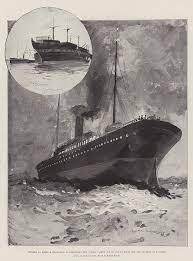
Ayah Campbell's Nubia in Plymouth 1879, setting out to bury at sea one of the dead soldiers. Image by Henry Charles Seppings Wright, The Illustrated London News, 16 January 1897.


It was the run-up to Christmas and New Year. Pandemics were on people’s minds as they travelled to the UK from hot-spots aboard. 

Such travelers included a hired care worker, her employer and the baby. They were among the hundreds of passengers facing the prospect of death either en route or on arrival. 

Sound familiar? 

Yes, but...

  • This was 124 years ago, in 1896-97. 
  • Cholera, not Covid, was the dreaded ‘plague.’  
  • The care worker was not a Filipina maid but a ‘native nurse’, presumably an ayah. 
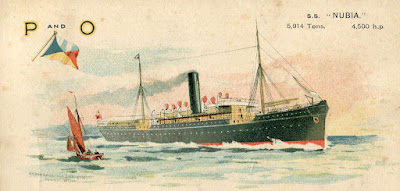
  • The port of Plymouth, not Heathrow airport, was the portal to which 268 passengers were headed.  Their conveyance was not an Easyjet plane but the troopship Nubia, which had been chartered from P&O.
  • These incoming, potentially infectious people were no hedonistic tourists but soldiers of the Loyal North Lancashire Regiment, the Royal Artillery, the Royal Engineers, and the Highland Light Infantry who were returning from tours of duty.

Ayah and Mrs Campbell 

Ayah Campbell was embroiled in this public health drama in 1896-97 because she was employed by a Mrs Campbell to look after baby Campbell on a three-week voyage from India. 

Ayah Campbell’s own name is not recorded – which was common. 

Indeed, it’s unusual that a reporter managed to glean any passenger’s name in such circumstances. Mrs Campbell may have been reprimanded for her disclosure.

We can hypothesise something about ayah who found herself in such a traumatic situation. 

A typical incoming ayah that year would have been in her thirties, married, and expecting to go back home within weeks, to be with her children and husband. 

The crisis would have been extra bewildering if her English was limited. It’s possible that the ayah was a wet nurse. However such a delicate matter would never be mentioned in a public report, let alone in a brief one. 

Mrs Campbell was possibly the wife of a non-commissioned officer. Her Scottish name suggests a possible connection with the HLI. Typically such homeward-bound military mothers were in their twenties. Possibly she was returning as a widow. I suggest this as no solder called Campbell is mentioned in the reports.


Unfortunately, data is limited. This is likely because of administrative inadequacy rather than an official-ish cover-up.  So it’s not clear whether the Campbell party had embarked at Calcutta or Colombo.

 Indeed, had they even joined after as the ship wended its way north through the hellishly hot Red Sea at Christmas and then north west to Port Said, Malta, Gibraltar and home?

We might imagine that the Yuletide celebrations on Nubia were something like those in this image, created a decade earlier.   


How did the drama come about?

The Campbell party were leaving behind an India facing Bubonic plague in some areas, and a famine so severe that Victoria mentioned it in her Queen’s speech in January 1897.  Plus, for at least half a century, Asiatic Cholera pandemics had been a cause of anxiety, following the 1817 and 1826-37 outbreaks.

Nubia’s cholera emerged a few days after the vessel had coaled in Port Said on Wednesday 29 December. 'A quantity of fruit and vegetables was taken on board with other stores, and it is supposed that this led to the outbreak,’ reported the Evening Mail. (But Egypt counter-claimed that it was cholera-free.)

By the time the Nubia was past Malta a few were sickening. The ship’s medical office must have wondered if the diarrhoea (a key warning sign of Asiatic Cholera) meant the trouble was serious. Or were his charges just suffering from the common and tellingly-named ‘Gyppy Tummy’?

He was helped by soldiers’ selfless comradeship. ‘On the outbreak of the disease some of the soldiers on board volunteered to ... [and] acted as nurses. These men have so far escaped the disease. Their conduct is the subject of warm praise.’ 

Although soldiers and lascars were suffering, the civilians were alright.  They included at least eight women, and 15 children, who were anyway socially distanced. In that period of moral vigilance and strict hierarchy women would typically be segregated from the soldiers. And all diligent ayahs were always hyper-protective of babies.

Arriving at Plymouth

Two lascars and two soldiers had died by the time the ship arrived into Plymouth Sound at 3.30 am on Saturday 9 January. TSS Nubia arrived flying the square yellow flag warning that a ship was yet to be cleared of contagion. 

Ayah Campbell must have woken up with the hope of finally placing her feet on dry land that weekend. She was not so fortunate. 

The ship had to anchor a safe distance away from the harbour. Instead, she probably wrapped up the baby and watched as the tenders arrived carrying the alerted public health authorities that day and on the next. 

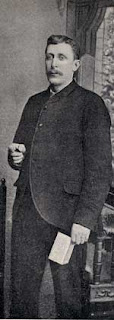
Dr FM Williams, Surgeon-Major-General J. B. Hamilton (who’d been on the hospital ship Tenasserim in Burma), and Dr Herbert Timbrell Bulstrode (pictured), took the outbreak very seriously. However they agreed that it had been well-contained and the worst was over.

Poorly people were moved to the nearby hospital ship Pique. Everyone still on board Nubia endured the stench of sulphur as working parties fumigated the infected areas. 

A fourth soldier died. And the troopship became a hearse as two soldier’s corpses were taken out to be buried at sea. 

Female attendance at funerals on land was sometimes seen as unseemly.  Ayah and Mrs Campbell may have stayed safely in a warm cabin, avoiding the melancholy spectacle and the chilling January winds off the sea.

The two lascars’ internments were not mentioned. Indeed Hamilton did not count the seafarers in his figures.


Ladies freed first

In two batches the women were freed. ‘Three women and three children were amongst those who landed, and they were placed in a closed vehicle and driven to Staddon’ Fort.’

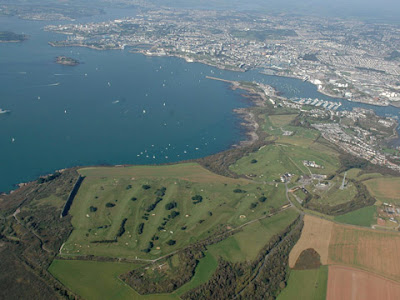
Staddon Fort today, Picture by Steve Johnson,
courtesy of http://www.ecastles.co.uk/
plymoutheast.html

The soldiers, by contrast, marched there and stayed for a quarantine period. 

On Monday 11 January 1897, ‘Most of the wives of the non-commissioned officers prepared to go to their homes and were passed by the medical officers. They were landed at Millbay Docks with four married soldiers.’  It’s not known whether Ayah Campbell was in the first or second group.

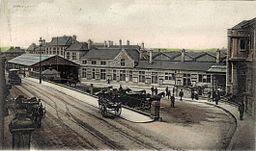
Millbay station. Ayah Campbell would have departed from here

‘Later in the day these men, with seven women and 13 children, left by train for their various destinations. Their luggage, was, however, detained for disinfection.’

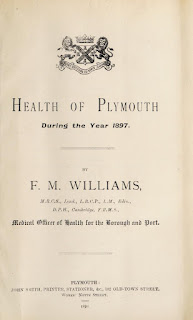
Dr Williams reported afterwards (see pic below left) that 27,000 items from the Nubia were treated by super-heated steam at Plymouth's new disinfecting station. This amounted to 87 per cent of the 31,000 items processed in the entire year.  


What happened next?

Ayah Campbell’s story ends with some men’s continued illness and recovery, but only one more death: six in total. The scare was declared over. 

There was, of course, no televised reassurance from early equivalents of Prof Chris Whitty and Sir Patrick Vallance. The Nubia case had not become an enduring matter of national concern.

Still being fumigated in the Channel, Nubia sailed on to Gravesend.  

Within two years  the ship was, ironically, used as a hospital ship in the second Boer War. For a film of its departure from Southampton in 1899 see https://player.bfi.org.uk/free/film/watch-troopship-nubia-leaving-harbour-1899-online

And the British Medical Journal carried a little self-congratulatory material about how the 1896-97 Nubia events had been handled.

 Did Ayah Campbell stay in Britain, relieved that her contract had not ended with death at sea and that ‘her’ baby was safe?  Did she sail back home with a new memsahib and even risk going ashore in Port Said? There’s no record.

Nor is there any record of a  reply to Havelock Wilson’ parliamentary question two years later, in April 1899:

‘I beg to ask ... the number of lascar or other Asiatic seamen employed on board the P. and O. steamship "Nubia," on her last voyage, as sailors, firemen, cooks, stewards, and boys  ...  the number of superficial and cubic feet of accommodation provided in the forecastles set apart for such persons ... and whether such accommodation is in accordance with the provisions of the Merchant Shipping Act?’

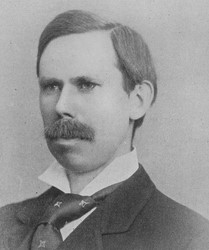
The point being implicitly made by the head of the seafarers’ union NSFU (pictured, right) was, of course, that overcrowding caused ill health among the Asian seafarers. 

Scores of Lascars would have been living in such conditions when Ayah Campbell was aboard. 

Sunday, 16 May 2021

Wot dunnit? BAME nursemaid’s puzzling death, Suez Canal 1909.


Mystery, race, gender, bravery, and power at sea in a colonial context. This is about the intensely puzzling case of ‘Amah Bird’. 

Amah Bird was an un-named Chinese nanny who drowned while steaming between England and Hong Kong in 1909 on the liner Palawan (see above, Palawan's sister ship, Sunda).

In looking at the sparse and racialised story of her final moments we can see the image and realities of a certain sort of worker and voyager, more normally pictured in a nursery on land. (see pic) 


Amah Bird is a reminder that sea travelling – which sounds so delightfully liberating, and which Virginia Woolf was already reflecting upon for The Voyage Out  – can damage your emotional health as well as your physical health. 

And that seems unfair when you are only at sea as an obligatory part of your job.

THE KILLING SEA

Not just external factors such as torpedoes, acts of nature, or navigational incompetence lead to voyagers dying en masse as, say, on the Titanic.

But also individuals on board die, singly, because of misadventure, stressful emotions and misjudgement. Some inadvertently fall overboard. Some jump. Some are pushed.

In other words, it’s not necessarily bumping into the iceberg wot dunnit. A dislocated person’s anger and fear can be a cause of maritime death too too.

BAME women who travelled for work as nursemaids, accompanying mainly European families involved in empire building, are a particularly interesting category of passenger.

These ayahs and amahs are barely known as subjects. So any evidence, including reports of their mishaps, is useful. 

The P&O Building, Hong Kong. The Bird family
would have got their tickets from here.
Image courtesy of Gwulo.com 
Reading between and beyond the lines of newspaper articles about their deaths can help reveal something about their lives and contexts. The more the column inches, the more the leads available to historians in pursuit of these occluded female worker-passengers.

Posterity can benefit from just five column inches about Amah Bird.

The few words help sleuths begin to ask ‘What was going on, at breakfast time on P&O’s little Palawan, in the Suez Canal on 23/34 October 1909?’

Did Amah Bird jump or did she fall? Was there a murder-and-suicide combined? Or was there just a tragic mistake that terminated two promising lives, Amah Bird and two year-old Elinor Bird?

Was the amah a selfless heroine? A murderer?

Or, tragically, was she just a diligent, under-informed  carer in a messy, ambiguous and quotidian situation that became briefly elevated into a race-tinged late imperial drama?


DYING IN SERVICE AT SEA

At least eight incidents on the high seas between 1848 and 1915 brought the deaths of ayahs and amahs.  I’ve been inspired to investigate, as part of the new Ayahs Research network that is uniting scholars worldwide. 

See, for an example, Ayahs and Amahs: Transcolonial Servants in Australia and Britain 1780-1945, https://ayahsandamahs.com..

Relatedly, over the next few months, my blog will offer stories of the ten known seagoing Asian nursemaids for whom travel was fatal. Class, gender and race contribute important dimensions to these fatal voyages.

Amah Bird is the first I’ve written up here. But at least eight had preceded her in the nineteenth century. No known photos exist, but the picture (left) shows a classic representation of an amah. (Image courtesy of https://visualisingchina.net/blog/)

Not only does her overlooked voyage offer the opportunity to explore the history of one of these beloved but anonymous ‘almost-mothers’.  

The story also helps people speculate about the hidden and exceptional upstairs-downstairs tensions in the nursemaid’s employment. She was temporarily obliged to be on the high seas, in conditions not of her own free choosing. What was that like? What was the nuanced context?

The exceptional manner of Amah Bird’s death enables us to wonder at the possible emotional and dynamics involved: her own, and that of those of the distant people who only read, the highly mediated reports about the last mysterious hours of this ‘British’ Deck-Class passenger in  a floating ex-pat enclave heading for Yokohama.

HEROINE, MURDERESS OR MISTAKE-MAKER?

 Chapter one of the story emerges just over a day later, on 25 October 1909. A syndicated report was circulated by Reuters, then the world’s leading English language news agency. Even the far away Leeds Mercury picked it up, verbatim:

DROWNED IN SUEZ CANAL. CHINESE NURSE’S FUTILE ACT OF BRAVERY. (THROUGH REUTER'S AGENCY.)

Port Said, Saturday.

Yesterday, while the P. and 0. steamer Palawan was passing through the Canal, a child named Bird fell overboard, and a  Chinese ayah jumped into the water after it. Mr. Jones and Quartermaster Watler [sic?] rescued them, but the child and ayah died two hours later.

The information was telegraphed, at speed, so necessarily brief. The headline implies a common imperial trope: the idea that native servants are so devoted to their white charges that they will lay down their own lives for the sake of ‘their’ children’s.

Many modern historians of empire charge that imperial subjects were regarded as only uneducated natives who acted with emotionality or irrationality.  Such a view underlines white superiority and thereby justifies imperial rule.  And Amah Bird was female, to boot; the word ‘futile’, qualifying ‘bravery’ is important here.  

Chapter two of Amah Bird’s story is revealed 24 days later. Probably the Port Said authorities released a more detailed story to journalists working for English-language papers in Asia.

This new, less melodramatic, turn seems not to have been picked up by Reuters or other European news outlets. 

The Singapore Free Press and Mercantile Advertiser announced:

‘It appears that shortly after breakfast the alarm was raised of man overboard. The body of the little girl Bird was seen drifting away, whilst behind was the Chinese amah.

‘A second class passenger, Mr AW Jones, who we are informed is proceeding to join the Shanghai Police force, jumped overboard from the poop deck and swam to the rescue.

‘He got up to the child, who was still alive, and supported her till rescued by the [ship’s life-] boats, the rescue taking considerable time.

 ‘The amah, when brought on board was dead, having been drowned ...  the child was still alive, the theory being that a blow she had received in falling overboard made her unconscious for the time and prevented her struggling.

 ‘Everything possible was done to save her life but she died shortly afterwards from shock and exhaustion.’

‘Extraordinary to relate, the child and amah fell from one of the lavatories through the porthole.’

Mr Jones was feted. The British Consul at Suez was informed. 

And ‘a verdict of accidental drowning was decided on. 

'The burial took place at sea.'

‘The greatest sympathy was shown for Mr and Mrs [Lennox and Margaret] Bird, who were on board, and the affair cast a gloom over the whole ship all the voyage.’

Picture: Architect Lennox G Bird in later life, as officer of the Hong Kong Volunteer Defence Corps


FINALE / CONTINUATION

And so ends the public story. The private one of the impact on the amah’s family, and the Bird family, has never been told.

112 years later I’ve found much more information, which will be published in a detailed account elsewhere. 

Exciting discoveries include learning Elinor’s name;  glimpsing the life she might have led, by seeing her sister’s career story on ancestry.co.uk; and accessing images of Bird houses in Lugard Road, Shek, which the amah would have known, had she lived longer.


Picture:27 Lugard Road, designed by Lennox Bird for his brother. Lennox lived at no 28.Image courtesy of Gwulo: Old Hong Kong

COULD IT BE?

What remains is the mystery about how and why and how Elinor and the amah got through a small porthole. As someone who knows about gendered disasters at sea, my idea is as follows.

Step 1. The amah and Elinor had gone to the communal First Class ladies’ bathroom after breakfast. They went everywhere together, as they had on land.

Step 2. The amah held Elinor up, the better to look through a porthole. Maybe they were looking at a camel on the banks of the canal. Elinor struggled out of the amah’s hands and into the sea.

Step 3. The amah, on adrenalin, did the first thing that occurred to her: took direct action and tried to save the child by diving after her, rather than running up on deck to alert an officer to arrange a rescue. She may have thought she didn’t know who to tell, or felt unconfident about her skills in communicating in English. Maybe Mr Jones was alerted by the splash, or a yell from the amah.

Step 4.  Once in the water, the amah perhaps found her ability to swim was poor or non-existent, so she couldn’t catch up with the child.

 If Elinor was indeed unconscious (as a result of hitting her head against the hull as she) fell then the amah is likely to have panicked and felt desolate that Elinor was not able to reach out her arms to be helped. 

The amah’s distressed breathing and any drop in morale would have worsened her ability to save herself, especially if wearing a hampering sari and if the Canal was cold. 

(The water’s overnight October temperature is 66 degrees F at worst.)  (See picSuez Canal. Courtesy State Information Services, Egypt. 

OR COULD IT BE ...

One of my next stories in this series will be about a Japanese amah who deliberately pushed her little charge through a porthole, and then flung herself overboard. Fatally.

As a result of that indication of possible travel rage I wonder if Amah Bird could have been a strict disciplinarian? Or was she someone at the end of her tether about a child’s capriciousness, the employers’ attitudes, the upsetting behaviour by someone else on board in that discriminatory hierarchy?

Could extreme stress have led her to administer the utmost punishment or revenge? Any Sherlock Homes will be alert to the words ‘blow she had received.’

 Either way, the amah’s promising career at the margins of Hong Kong high society and her trip to fabled England ended in tragedy for her. Maybe her actions also re-triggered wider xenophobic doubt about the general reliability of amahs as custodians of the empire’s upcoming generation.


Sunday, 7 March 2021

To Marseille and beyond: avec amour and murder plans


L to R: The steward, the adulterous wife, and her husband, the
mariner's orphan whom they murdered

Sex, sea, stabbing, scented baths and ruthless day dreams. The 1922 Thompson-Bywaters murder trial at London's Old Bailey offers a new angle on the sea life, involving a ship’s steward and the daughter-in-law of a maritime family. 

The case also reveals the most scandalous exchange of letters in the gendered history of relationships between people far away at sea and those ashore who’ve barely travelled. 

In this blog I: 

  • bring out the maritime aspects of the participants' lives, which has never been done before
  • show that knowledge of a ship's timetable was nearly as central as knowledge of a railway timetables in an Agatha Christie whodunnit. 

COMMUNICATIONS MATTER

Letters were crucial when emails and social media didn’t exist. And they’re a historian’s delight. Modern landlubbers can learn about past life on the seas partly through wives’ letters to officers, such as Fanny’s to her husband Edward, Admiral Boscawen. Migrant voyagers’ epistles to families  tell gendered tales too.

But the famously infamous correspondence - between glamourous vamp Edith Thompson and stylish Frederick Bywaters, a P&O steward, a hundred years ago this year - make very different reading. 

The couple were hanged for the murder of Edith’s husband, Percy Thompson, in 1923. Freddy premeditatedly leapt from bushes and stabbed Percy on the way home from the Criterion. 

Why? To enable the adulterous affair to bloom, as Edith wanted. Or did she really?  

Edith, fifth from left, at the wholesale milliners where 
she worked, Carlton &Weiss

DARLING OR DREADFUL?

Four portfolios of Edith’s hyperbolic letters – now typed up and five inches thick - were used in court. They were perused as evidence of ‘one of the most extraordinary personalities’ that courts had encountered in the history of female accomplices.  

Well, what can you expect of an adultress so shockingly unconventional that she continues to work after her marriage; of an almost-vamp who later stars under the chandelier in the ‘worlds’ most famous courtroom’ sporting ‘a black velvety hat with black quills curving forward from the left side in a scythe-like sweeping drop’. 

A vulgar older woman ensnaring an innocent mariner? An intelligent arty day-dreamer whose young lover gallantly helps her divest herself of a mismatched husband: a Presbyterian non-dancer who, ergo, had it coming to him?   

1922. Helpful sailor delivers teas to long queues
waiting outside the Old Bailey for the verdict  

No wonder that seafarers were part of the Old Bailey queues in the exciting ‘show’. 

Those heading for the public gallery members queued long before dawn in Newgate Street include two seamen.

 They told the Evening News that they had a ‘professional interest in the case’. Presumably they were P&O shipmates who’d take the gossip back on board.


BONUS

Delightful melodramatic spectacle aside, there’s a bonus. People interested in the sea’s history can also use the letters to gain insight into the subjective history of seafaring labour and the emotions in relationships shaped by geographical distance. 

The milliner's letters were written alone in her rented downstairs flat at The Retreat, 41 Kensington Gardens, Ilford. They went to all points on P&O’s trek between the British Empire and the Antipodes. 

Her recipient was a lowly but cocky rating in a floating 24-7 community of thousands. He was on prestigious, not emigrant-laden, liners at a time when travel was seen as making voyagers prestigious.

It’s not just that, counter-intuitively,  these effusive, uneven torrents were so interlarded with discussions of doing away with a human hindrance: the limited Mr Thompson. (Tina Turner’s words, ‘What’s love got to with it’, could be the soundtrack for this melodrama.) 

But also it’s very interesting to see the side-story: how this woman on land knew precisely where her lover’s floating workplace would be, because accurate timetables were available, just like Bradshaw’s Railway Handbooks. 

Arrivals and departures on sea route had become a precise matter. You could set your wristwatch by them.


Courtesy of P&O Heritage.

Arithmetically adept, Edith understood exactly when his ships were due into Marseille and Gibraltar, Port Said and Plymouth, Colombo and Aden, Bombay and Melbourne, Sydney and Fremantle. 

Although she'd never sailed, this landlubber knew the very hour that faraway Freddy could be expected to dash off replies to catch a homeward-bound mail ship.

Also, here in the UK, to avoid her husband knowing about her adultery with their young ex-lodger, Edith physically collected the ship’s mail from the London sorting office.  


Freddy’s ship, RMS Morea, Leaving Royal Docks,London, 1911. (Courtesy P&O Heritage)

In this way we also learn about how a seafarer’s partner gains unusual knowledge of maritime mail handling. Edith explained how the system works in this letter to Freddy in Fremantle in July 1922: 

‘Darlingest Boy ... I went to the G.P.O for the Port Said Mail and encountered the first man that I saw before – he handed me a registered envelope from you 

'... and told me if I had an address in London I couldn’t have letters addressed to the G.P.O. – I told him I hadn’t – but I don’t think he believed me anyway he didn’t give me your Port Said letter and I hadn’t the patience to overcome (or try to) his bad temper.’


REVEALING LETTERS

Professor René Weis, the author of Criminal Justice: The True Story of Edith Thompson, (Penguin, 2001) has made all the information, including transcribed letters, freely available on line. https://tinyurl.com/Letters-Edith. (I am very grateful to him for all his kind support).

The correspondence begins just short of a hundred years ago, on 11 August 1921. It continues while the two were in Holloway and Pentonville. Only the noose ends it.

Unfortunately, what remains is mainly one-sided. Most of Edith’s letters are available because Freddy kept them safe in his ditty box, the locked wooden box in which each seafarer placed their most precious objects, and which no honourable shipmate would broach. 

Replica ditty box. http://maritime-universal.org/ship
-store/sailors-ditty-box

When her mother later ask Edith why she has written ‘such letters’ she replied ‘No one knows what kind of letters he was writing to me.’

 Few letters by Freddy exist because Edith had to destroy them to keep her affair secret.  

I’m familiar with the idea that early 20C ship’s stewards could be rather flashy ne’er-do-wells. 


Freddy’s beautiful handwriting, impeccable phrasing, and use of Italian and French phrases in the several extant letters reveal that this purser’s writer (a kind of ship’s secretary) and later laundry steward, was strikingly adept at giving a stylish impression. 

After all, this handsome man of ‘smouldering masculinity’ and ‘studied arrogance’ had been picking up lessons from other Merchant Navy seafarers since he was 15. 

He’d been on the Nellore during WW1, when it was under torpedo and gunfire attack.‘Seasoned’ and ‘heroic’ might be words he’d use to describe himself. 

Plus he’d taken dancing lessons. This was a man who calculates how to perform, as some stewards did.  

(Courtesy P&O Heritage)

For six years Freddy had been working for one of the most prestigious companies in the world: on the Malwa in 1920, the Orvieto to Brisbane from Feb to June 1921, then the Morea.  And white ships’ servants often adopted the swagger of elite passengers, as well as regarding themselves as immensely superior to the ‘Lascars’. 

Although his record of service was stamped VG (Very Good) Freddy had, in fact, blotted his copy book by precipitately leaving the Malwa’s tender, off Tilbury in January 1921. 

Percy Thompson’s intervention (he was friends with the Orvieto’s purser) had led to the company taking Freddy back. But the faux pas may explain Freddy’s demotion from writer: he couldn’t quite be trusted.

In Freddy's letters he is nothing like as passionate, nor as grammatically challenged, as his 28-year old lover. 

The much-questioned tale of their shared role in killing Percy is well-known, not least because of all Edith ‘over-wrought’ letters. These were read out at the Old Bailey trial, to her family’s shame.  Several were censored because they mention such scandalous subjects as orgasm and her abortion, though very obliquely.

Mainly her letters are like those of any lover made anxious by the long separations and uneven silences.  ‘Why are you so late this time – oh I hate this journey, I hate Australia and everything connected with it – it will be 109 days since I’ve seen you – and you didn’t answer my question about China and Japan next time.’ 

She mithers about whether he still loves her, and how she’s performing: ‘Darlingest boy, when you get my letters and have read them are you satisfied? Do you feel that I come up to all your expectations? Do I write enough? Just don’t forget to answer this.’

Edith also passes on the East Ham gossip, including describing her day out at the local Seamen’s Orphanage Fete. 

The Merchant Seamen’s Orphanage. Courtesy of
childrenshomes.org.uk and Peter Higginbotham
She was probably attending because the Thompsons knew maritime life and may have been helped by charities since 1901 when Percy’s mariner father, Robert Conen Thompson, died leaving three orphans.  

Percy himself worked as a clerk for Commercial Road timber shipping agents Messrs Parker & Co. His sister Eliza worked for tea merchants. Brother Richard did accounts at a City paper merchants. 

(The under-funded Snaresbrook-based institution housed many child victims of P&O and British India Line shipping disasters, just as the Liverpool and Southampton seafarers’ orphanages were evidence of the shipping lines based there, such as Cunard and White Star respectively.  


Most of all Edith discusses novels with Freddy including Bella Donna, about a woman who slow-poisons her husband. (Edith had tried smashed lightbulb glass in Percy’s mashed potato – or was that just her fantasy?).

The 1911 film Bella Donna, based on the book that Edith 
discussed, as a model murder method, with Freddy far
away across the seas

Like so many millions of relatives of seafarers thinking ‘There but for the grace of God goes my man’ Edith feels alarm at the maritime fatalities that might befall him:‘Darlint I had a terrible shock when the Egypt went down Imagine what I felt can you?’

 (The Egypt was another P&O liner, but on the Tilbury-India route. It had sunk in just 20 minutes after fog caused a collision, causing some Asian and European crew to be lost).


TRACK N’TRACE

The extracts that follow show that the structure of Edith and Freddy’s lives was created by the ship’s predictable schedule in 1922. By then steam ship voyages were so reliable that you could set your clock by them. 

Hopeful emigrants went out. Refrigerated cargoes, such as meat, came back, along with emigrants who'd made good. 

On 28 January Edith writes ‘Darlingest boy, its Wednesday now, the last for posting to Marseilles.I’ll be thinking & thinking, wishing such a lot of things tomorrow – late – when I shall know you have arrived.

‘Darlint is my letter to Bombay awaiting you on arrival, or do you have to wait a week for it, I believe you do,’ she enquired on 15 February. 

Marseille docks, P&O vessel and mail sacks.
Courtesy of P&O Heritage

To Freddy in Marseilles on 6  March she rejoices : ‘I was pleased to get letters from you last Monday I hadn’t expected any – as I got that note – after the Port Said letter & thought it must have been posted at Aden. Darlint if you were 1 ½ hour out from Port Said how did you post it?’

 ‘Will you tell me how many letters you have got at Marseilles. Wed. the last day for posting was fearful here – gales and now storms, and I believe the next day no Channel boats ran at all. I hope nothing went astray. I wrote three letters and one greeting, posted separately ... Altho’ it’s Monday darlint, the mail from Marseilles is not yet in, I’m expecting it every moment, I wish it would hurry up and come.’ 

NEITHER FAST NOR FREE COMMUNICATIONS

Today’s e-correspondence is so virtually cost-free and instant that people contacting seafarers don’t usually have to think about communication methods in the way Edith did. 

For example, usually she put on five penny-worth of stamps.  But in Exhibit 17 she’s concerned: ‘I believe I insufficiently stamped the first Marseilles letter I sent. If I did darlint I [am] ever so sorry, I hate doing anything like that. You know don’t you.’

Long delivery delays brought worrying gaps, but also accumulations (which could impose oppressive duties on recipients).  You can see this in Edith’s letter to the Morea in Marseille in May:

‘By now darlint you will have heard from me several times. Yesterday [Sunday 14 May] you passed Suez and got my Port Said letters. I’m so sorry it’s a long time from Marseilles to Bombay, when you hear from me, but I can’t do anything to help it can I darlint? 

'You’ll be able to talk to me a long time this week to post at Marseilles because you’ll have all my letters to answer.’ 

(Courtesy P&O Heritage)

Infrequently cables are used instead of letters. She writes: About the Marconigram – do you mean one saying Yes or No, [that I have killed him?] because I shan’t send it darlint. I’m not going to try any more until you come back.’ 

Edith’s letter of 20 June reveals the classic obstacle to communication in the period: money. 

‘I have been looking at the mailcard and see you do not arrive in Australia until July 22nd – I’m so sorry – I wish I could afford to cable you a long long letter to somewhere before Sydney, or better still, to be able to phone to you and hear you say “Is that Peidi?”'

And the problem that besets seafarers’ digital communications today – signal range – beset Edith too. 

On Freddy’s 20th birthday she sends birthday greetings to Melbourne via Marconigram: ‘I sent you greetings by cable this time it was the only way I could celebrate darlint I wanted you to receive it on the exact day but I’m afraid you won’t it’s not my fault darlint its the fault of that ship of yours not being within radio range of either Aden or Bombay on the 27th [June].’

When autumn begins and Captain Garwood’s team is homeward bound again, on 21 September, Edith writes yet another date-aware letter:

 ‘I’ve not sent a wire to Plymouth to you ... I see you left Gibraltar on the 19th and perhaps you will get in Saturday morning – then I shall send you a wire to Tilbury to meet me in the afternoon – if it’s at all possible for you.’

DREAM ACHIEVED BUT...

Within ten days of landing back in England, on 3 October Freddy commits the murder of Percy Thompson that Edith had – sort of – longed for.  (People still argue that she had only been fantasising.) 

 The couple would exchange no more letters across the seas.  On 9 January 1923 Edith and Freddy were hanged, and then placed in separate graves. 

The cause celebre is the focus of books and films, including Another Life (2001) with Natasha Little playing an un-sultry Edith. Should the lovers have been hanged? Was justice miscarried?

Pola Negri, marketed as Hollywood’s most smouldering and exotic vamp, starred in Bella Donna three months later. Lookalike Edith would have been writing Freddy rapturous letters about it.

Until scrapped in 1930 the Morea kept ploughing from Tilbury to Australia, regular as clockwork.

 Outbound, Freddy’s former colleagues were busy with holidaying passengers using the summer season to explore beyond P&O’s mail routes. Increasingly P&O was marketing tours or broken journeys to passengers, while still sticking to the Mail schedules.

Stewards must have found passengers’ curiosity wearing: ‘Bywaters, your shipmate. What was he like, eh?’ 

But surely the jute sacks full of love letters to and from P&O crew were never again laden with murder plans.