Showing posts with label racism. Show all posts

Sunday, 9 February 2025

The gloryhole queens' heroes: US maritime union activism 1930-1955

LGBT+ seafarers in UK really have no maritime union heroes. I've looked hard. 

By contrast, in the US the National Union of Cooks and Stewards (known as the  MCS for short) had a number of out activists who were 'queens.' The term was less rude than 'queer'.

The main two heroes, who remain legends, were Frank McCormick (1891-1980) (right) and 'Mickey' Blair (1917-1997). Mickey and Frank were life partners too. And they both loved dressing up and performing as women when informal theatrical opportunities were on offer.

Frank was an official and on the MCS executive. Mickey (Stephen) was a rank-and-file activist. Both were stewards, who lived in ship's gloryholes (cramped dormitories), worked 90-hour weeks, and believed in justice. 

Both had been dismised for 'homosexuality'. In Frank's case the US Navy dumped him in the 1920s. 

Among the ships Frank and Mickey worked on were Matson Line passenger vessels from California. such as the Lurline (pictured). Matson ships were known to be sites of camp subculture. 

Matson, like some UK companies, liked having gay stewards because of their perceived “feminine touch". Also companies didn't want to employ black stewards. As heterosexual white stewards wouldn't work for the low pay on offer, so willing white GBT men provided employers with a solution.


UK similarities 

  • The nearest UK equivalent to Frank and Mickey is an unnamed member of NUMAST. In July 1994 this person tried to start the support group, Shore Leave. They appealed via the union's journal. Nothing seems to have got off the ground.
  • The UK's main ex-seafaring activist was Mick Belsten (pictured far right, below) (1934-90). A former P&O steward, Mick became a Gay Liberation Front media worker after he'd left the sea. GLF was influenced by some of its founders' visits to the US. If Mick did ever try to encourage his union to be more progressive his efforts don't appear in any National Union of Seaman records. Mick Belsten NUS GLF

Why no progressive LGBT+ heroes?

That lack of inspiring figures seems counter-intuitive when some ships - like theatres - were the most camp workplaces in the world, c1950-1985. Floating "queer heavens" were key sites of proud informal solidarity and education.

But in those times trade unions were not so supportive of DEI as they are today. Men who were tough resisters of homophobic oppression at sea might well have recognised that shore-based formal trade union activity wouldn't have been effectve or as satisfying as workplace change-making.    


Attacks on activists in US

In the US the MCS was totally different to the usual pattern. The union had thrived in the 1930s and in WW2, precisely because it was  indeed inclusive. Membership jumped threefold to 15,000 from Frank's starting time. 

Then a post-war and Cold War backlash began. The rationale was that 'fruits' were a threat to national security. Race was not the issue; 'moral decay' and 'Communism' was.

As a result, the new Port Security Act said the Coast Guard must officially screen seafarers joining ships: one by one, every trip.

In Los Angeles on Monday November 6th 1950, Mickey, Frank and some comrades were hit by the anti-gay hysteria besetting the nation. They walked up the gangway of the Matson Liner Lurline (nicknamed the Queer-line), ready to work their way to Hawaii.

But in all eighteen cooks and stewards were turned back including Mickey, although oddly not Frank. That might have been 20% of the catering workers aboard. 

The ensuing fight-back focused on 'The Lurline Eighteen' case became a cause celebre. Scotty Ballard, a gay black steward, (pictured) led the multiracial Seamen's Defence Committee, which worked in conjunction with the longshoremen and the MCS. 

Scotty and his gay white friend Ted (Riff-Raff) Rolfs, created leaflets, sent letters, and picketed the Coast Guard offices. 

But by January 1951 almost every leff-wing steward from US West Coast ships had been removed. Three quarters of them were African American. An unknown number of the screened-off people were gay. All were progressives.

It was the start of the end for the MCS. Like other left-wing US unions, it was defeated, not least by the 1947 Taft-Hartley Act. 

UK: different focus

In the UK the progressive activism was against right-wing rectionary policies, rather than against homophobia, which was not mentioned. Race continued to be a thorny matter, during and after WWII. 

Preparing for the 1967 Sexual Offences Act meant that the NUS had to speak about homosexuality. It was not progressive.  

By then a new breed of gay activist was emerging: not apologist or apolitical, but confrontational, libertarian, and aware of gender politics. Mick Belsten in London was challenging homophobia but not with maritime workplaces in mind. 

Seafaring had taught him a transferrable skill: how to organise and enjoy solidarity. He wasn't involved in shipping now in any way but because he had travelled so much he was able to enjoy thinking as an internationalist.

In the wider UK, it took until the 1970s for unions to start backing LGBT+ rights, including unfair dismissals. This was a time of new anti-racism activism too. The developments were asymetrical. 

At the weekly Gay Liberation Front meetings that Mick Belsten attended 200-300 were there. Though the radicalism in LGBT+ politics declined in the 1980s, in the 1990s uneven action for minority rights really took off, especially in local government and teachers' unions.

Interweaving strands

Over in the US Frank and Mickey were aware of the changed climate created by the 1969 Stonewall riots, just as Mick was in newly-pink London. 

Frank died in 1980, just before AIDS changed gay seafarers' views of their sexual safety in foreign ports. 

Mick was by then a very effective radical journalist. In 1990 he fell victim to an AIDS-related illness, just four years before the attempt to initiate the Shore Leave support group in 1994. 

Mickey died in 1997. He surely never knew about Shore Leave, but would have been happy to advise on tactics. 

He was always pressurising Allan Berube, his union's historian, to make sure the full story of the MCS was told. Allan did so, many times, before he died in 2007. His records are crucial to the world knowing just how extraordinary this maritime activism was. 


FAQs

How come a union in any country could be supportive of LGBT+ in those early days? It was a time of general progressive support for justice for marginalised people, including black workers. We'd call it intersectionality today. 

What Frank and Mickey do? On their ships and in union headquarters they oranised, challenged, supported. The union even had its own hiring hall, to bypass shipowners.

Were Mickey and Frank acclaimed in their lifetime? They were appreciated. This was not a union that went in for hero worship, or for making activists union presidents.

What did Mickey and Frank do when the union was demolished? They settled in Seattle and were still involved in gay community theatre.

--

Are you looking for more information? Try:

Virtually: The Stephen R. Blair papers, including photo albums, can be seen at at the University of Washington Special Collections. This archive can be visited virtually, by appointment: Blair pics

On paper: see Allan Berube, My Desire for History: Essays in Gay, Community,and Labour History, The University of North Carolina Press, Chapel Hill, 2011, Chapter 16.


Browsing: 

US. Waterfront Workers History Project, Harry Bridges Center for Labor Studies, Waterfront

UK. Roger Rosewell, The Seamen’s Struggle, Part II: The Fight for Reform, 1973, Minority_Movement


Saturday, 5 October 2024

Caribbean maritime courage: quarter-master Lionel Licorish on the Vestris, 1928.

As part of  Black History Month I'm celebrating a maritime hero from Barbados, Lionel Licorish  (pictured) and the intersectional story of his rescue work in a shipwreck sometimes compared with that of the Titanic. 

You can see brief YouTube footage of him at  British Pathe, The Tragedy of the Vectris (1928).

There's a troubling racist pattern in the story of shipwrecks: white passengers denigrating 'cowardly' black seafarers in lifeboats, accusations of cowardice were common. 

The bitter xenophobia is shocking. And it’s noticeable that white British crew’s lack of courage seldom gets mentioned.

But the white-authored story of Lionel Licorish refutes the standard hostile narrative. This quarter-master became a hero in 1928 for rescuing 20 shipwrecked people from the Vestris off Norfolk, Virginia (pictured). 

Lionel is possibly the black crew member most acclaimed in maritime history for his courage. 

This blog entry adds genealogical and maritime labour information to the usual accounts of Lionel's feat, contextualising it. Women are also in the picture. 


WHAT HAPPENED ON THE VESTRIS? 

Erica Wheatley tells the story well and in full here. I won’t repeat all the outraged discussion of the unsatisfactory vessel and the chaos when abandoning ship, which lead to at least 108 of the 328 dying. 

The ensuing inquiry was critical and many sued. The ‘WomenandChildren first’ policy had yet again proved disastrous. All 13 children and 28 of the 37 (or 38)  women died. This was mainly because they weren’t dispersed but put in the same lifeboats, which then couldn’t be properly launched. TAt least one of those boats bashed into ship’s side as they were lowered, inhabitants were tipped into the sea. 

It's not known if Lionel brought in women. But wireless brought swift rescue from nearby vessels. Luckily the sea was warm too. 

The  passengers were very angry when they came ashore from the rescue ships. Often survivors deal with grief and shock by blaming. The disproportionately high survival rate of crew, by comparison to white children's fatalities, caused resentment. 

There were rumours of a 'Negro mutiny,' having happened too. It seems many race-related matters have been covered up.

WHO WAS ‘OUR HERO?

The Barbadian was serving on a Lamport & Holt ship heading from Hoboken to Rio de la Plata, South America. He was 23, only 5 feet 6 inches tall, and very unassuming.  

Born in the parish of St Lucy, Lionel's surname wasn’t a colour-related nickname. It wast derived from an English doctor after whom Licorish village had been named a century earlier.

Before Barbados became a tourist destination jobs were scarce.  At 15 Lionel became a merchant seafarer, initially on sailing schooners. He’d then switched to steam-propelled vessels c.1926. 

Often seamen choose not to learn to swim. But on small  islands boys commonly played in the sea, and Lionel had learnt swim. This enabled him to be such an effective rescuer on the Vestris.

He’d been working at sea for about seven years, previously on Lamport & Holt’s Voltaire and then made a number of trips on the Vestris, rising to Able-Bodied seaman status.

African-Caribbean men from Barbados (which was then the British West Indies) were 49% of the crew on the ship’s voyage the previous month. So it’s likely that the percentage was the same on this trip too. 

Barbadian men were the biggest national group aboard: others were Welsh, Scandinavian, Dutch and German, but not Lascars. White people had the higher-status jobs. Bajans were mainly doing engine room and catering jobs. Deck officers tended to be English.

One of the surviving stewardesses on Lionel's ship was Clara Gorn Ball (46) of New York (pictured). She was praised for swimming for 22 hours and hailed as the 'bravest woman in the world.'

MODEST TALE  

For at least three months afterwards public authorities in the US feted Lionel for saving lives.  

The Times said that when he spoke on the arranged tour, he did so with “an unvaried absence of exaggeration:”  He simply explained “I saved 20 passengers, all that I could, which I thought was my duty.” 

Boston’s Globe reported that Lionel had ‘no stage tricks’… [but]  tells of his heroism much as if he were making a report of everyday activities, and he looks very much embarrassed while facing his audiences.’


‘NEGRESS STEWARDESS’ REJECTED

The lesser--known story is that while a black man was rescuing white people, white people had refused to rescue a black woman from the Vestris  

The British United Press syndicated a story about a black stewardess (unnamed) who was initially rejected by those in a viable liifeboat. Very downplayed, the brief article quotes English passenger Mr EM Walcott as saying that he was floating in the water when a lifeboat came along. 

‘Some of the occupants were willing to take him on board, but not the negress stewardess’ who he was helping. ‘“I had to argue with them... but finally they agreed to take both of us on board.’” 

Survivors in lifeboats sometimes refused to take others on board, for fear of swamping. But usually men, not women, were refused. Is this Vestris story about racism trumping gendered chivalry? Or is it about status: passenger hostility towards a lowly worker?

BLAMING ‘NEGROES’

The main Vestris story, though, is the feel-good praising of this black seaman who went out and swam people back to the lifeboat he'd secured.

He was especially celebrated in the weeks after the event. New York mayor James J Walker publicly said to Lionel ' When you left that ship and reached out your hands to save someone else’s life, it is fair and reasonable to suppose that no one asked what race you belonged to ....That was as all right out there in the raging waters. That was fine when the ship was going down.' 

But initially 'negro' crew were villified. I’ve done some digging to see who complained about People of Colour 's (POC) behaviour. 

Image courtesy of Gare Maritime. Mrs Marion
Calvinl Batten.;un-named man; Mrs Blanche
Smith Devore with Speedway Lady.
One of the ten women survivors was Blanche Smith Devore. She was married to racing driver Earl, who was going with his racing partner Norman Batten to racetracks in Argentina. 

Both men were with their wives. Both men died. The Devore dog, Speedway Lady, was saved, as was oddly under-mentioned son Louis/ Billy.

In one version of the story Blanche said she was standing on deck with her husband when the crew began belatedly launching the life boats. 

‘Three negro members of the crew took charge and the lifeboats started away. The passengers pleaded to be taken on board and some were finally admitted. 

'Her husband stepped over the side to follow, when the negroes pushed him away. The water was full of drowning men.’ 

The Birmingham Post reported Blanche as saying ‘I begged the crew to go their assistance but they refused….The last time I saw Earl he was standing on the edge of the ship screaming for aid.’

The story shifted a lot. Sharks became included in the sensationalist versions. Earl’s arm was said to have been eaten by a shark. 

AND AFTERWARDS?

1928. Trail-blazing journalist Lorena Hicock (pictured) of the Associated Press agency covered the sinking. Her story was one of the first in the New York Times to carry a woman’s byline.

1929. Such was passenger alarm about whether to trust the company that in late 1929 Lamport & Holt had to discontinue the NY-South America run. However it switched to crusiing

1930. The London inquiry went on for 40 days, longer than the Titanic's inquiry, with which the sinking is compared.  

Possibly the celebration of Lionel's action was an orchestrated diversion from the concern that there had been much cowardice shown by people in lifeboats – an unknown number of whom were Barbadians – and at all the company negligence.

1930Lionel went back to Barbados and married Carlene Hunt (pictured) (1912-2008) in 1930. It’s not clear how much he carried on sailing.  

In autumn  that year, 1930, the progressive campaigner Sarah Norcliffe Cleghorn wrote a poem ‘Ballad of the Golden Hands of Lionel Licorish.’ See it here.

1933. Three years later Lionel lost his golden status when he was jailed for smuggling in British Guiana. Bangor [Maine} Daily News report has a gloating tone along the lines of how the mighty have fallen. 

I can’t find further news about prison or his being unable to get work afterwards. Smuggling was a common crime for seafarers, not least because opportunities were so temptingly to hand and gatekeepers colluded.

Late 1930s. Blanche Devore ‘was still bitter about the crew, and about the amount of hate mail she received as ‘the woman who saved her dog and abandoned her husband.'’’ 

1940. Lionel became the father of Sybil. By WW2 he was at sea again.

1942. In January  his unescorted cargo ship, TJ Harrison’s SS Traveller  (pictured) was hit twice by a German torpedo from U-106. East of Boston, all 52 people on board were killed. Some were Barbadians. The ship was carrying explosives.

1950s. Carlene and Sybil Licorish, who had lived in St James parish, Barbados, seemingly emigrated to Ottawa, Canada.

TODAY. Lionel’s life is commemorated at London’s Tower Hill memorial, along with other merchant seafarers.


Wednesday, 10 July 2019

Chinese women working with UK ships in 20C

British maritime labour history is largely a history of white and BAME men, and possibly 1 per cent white women. 
Women of other backgrounds, including Chinese, Yemeni, and African women are almost entirely absent. This is a brief introduction to Chinese women's relationship with sea mobility and British seafaring.


Adam Williams, his Chinese amah, and mother Anne at one of Hong Kong's many bays, 1956.
Chinese women accessed the sea and mobility because of their work. 
Image courtesy of https://www.adam-williams.net/2013/05/17/adams-five-generations-of-a-china-family/


Attitudes


Q. Why the absence of Chinese, South Asian, Afro-Caribbean and African-origin women working on ships
A. The answer is that shipping companies deliberately excluded such women, despite their potential for being very cheap labour indeed, as both female and non-white. It's not that such women didn't want to go to sea.

Despite extensive research in shipping company and National Union of Seamen archives I have not found any  records of such women. Nor have I found discussions about excluding/including them. Reluctantly, I have to conclude that in the UK in 20C there were no BAME seafaring women. it seems extraordinary. 
I've had a lot of conversations with seafarers. From that I understand that the two main reason for this racialised and gendered exclusion are likely to have been on these grounds: 

1. PASSENGER ATTITUDES. Bedroom stewardess was the main job open to women until the 1970s. Companies probably believed that BAME women wouldn't have been acceptable to white lady passengers in the intense intimacy of a cabin. 

Yet such an objection doesn't seem quite plausible. White European women living in countries such as Singapore, Shanghai, Malaya, and Hong Kong readily employed Chinese servants, especially amahs (children's nurses, even wet nurses) in their homes. 
So it may be that actually the reason for the exclusion is about  the need for stewarding staff - as warders -  to subtly wield authority, to be a female-oriented part of the hegemonic and gendered control of passenger-inmates. 
Bedroom stewardesses and stewardesses had to, to some extent, regulate the passengers in their patch - for example ensuring they didn't request too much room service, and that they attended lifeboat drills.
It may be that shipping lines thought elite white passengers wouldn't accept such regulatory pressure from 'lower' status BAME women.

Also there were not enough Chinese or Indian female passengers to justify employers taking on women servants of the same nationality to look after them during the voyage. Cash-strapped shipping companies only do what they have to do, and employ specific staff only when it pays to do so. 
(This 'appropriateness' type of justification was later used in 1970s legal battles for equality. The concept of 'Genuine Occupational Qualification' was articulated, famously in a case where a gentlemen's tailoring firm remained men-only on the grounds that women should not measure male customers for trousers.) 
  
2.  UNION. The seafarers' union is likely to have opposed BAME women, on the grounds that white men, white women and BAME men - in that order - were more entitled to any available jobs. 


Presences

The main non-British women I have found working on ships have been:

 A. Europeans. Portuguese matrons or auxiliary nurses for migrants, pre WW2. They were employed by the shipping lines, usually Royal Mail and Blue Funnel, whose ships took some passengers of Portuguese background to Brazil. a former Portuguese colony. 
Crew agreements (registers of personnel aboard each voyage) show some of these women workers have British surnames. This suggests that local shipping agents in Portugal - say Lisbon - would have sought bilingual women, probably Portuguese women who were the wives and daughters of British men living there. 

Children were an increasing presence on ships after WW2. Their nannies, including ayahs and amahs, attended as part of their working day. Image from Tim Roberts' story, http://www.archhistory.co.uk/taca/memsmisc.html


B. Ayahs. é˜¿åª½. Children's nurses - especially from India, Ceylon and non-mainland China. They were employed by the traveller's family, not by the shipping line. They therefore travelled as passengers although they worked all the voyage long. This included the usual nursing, dressing, playing with their charges, plus attending at children's sittings for meals on ship, such as the tea party pictured above.
There are records of Indian ayahs aboard, but few of Chinese or Japanese amahs. 
(For a brief summary of amahs' role on land see 'A Lifetime of Labour: Cantonese Amahs In Singapore', 


C. Gash Jennies, in port. These Chinese women in British colonies worked briefly on British ships in ports such as Hong Kong. 
Affectionate, if patronising, bonds existed between officers and well-organised teams of women who routinely serviced moored ships, doing women's work. 

The most famous 'Jenny', who died aged 92 in 2009, led  a gang who: 
took ''over the domestic economy and husbandry of each vessel. They washed and ironed, cleaned ship, chipped rust and painted, attended as buoy jumpers, and, dressed in their best, waited with grace and charm upon guests at cocktail parties.

Captains and first lieutenants would find fresh flowers in their cabins and newspapers delivered daily ...[jenny earned] by selling soft drinks to the ships' companies and scavenging every item of scrap and gash which could be found on board.' 


Could have been in...

1. Galleys and laundries. It never happened. But it wouldn't have been too abnormal for Chinese women living in the UK,  to be employed in jobs that didn't involve passenger contact, such as laundry and galley work. 
It would have been especially 'natural' for employers to take on those women who were part of British culture because of their family connections with British seamen, as in the Portuguese example above
(By the early 20th century Hong Kong-origin Cantonese men were routinely employed in the laundries of some shipping lines.)  And British women to do such work were so hard to get that in the 1930s shipping companies took on criminalised young women from penal institutions. 
One reason for women not being taken on for such backstage work may have been cultural resistance from the community. Chinese people in the UK possibly did not think it desirable for Chinese women work away from home for months on ships. Their shipboard position would have been lowly, and perhaps morally compromised.  

Amah holding Linga in HongKong, c 1919.
Image via https://gwulo.com/atom/28110
2. Ship's nurseries. From the 1930s major passenger ships had nurseries, staffed by one nursery stewardess. 
From the 1950s a hierarchy emerged, as was traditional in grand houses: a high-status 'children's nurse' supervised the nursery stewardess, who had a more maid-like status, for example cleaning up spills. 
It would not have been odd if Chinese women did this work on ship. In fact they were never employed in this capacity on UK ships. There was no transition from land-based amah to professional travelling amah, as there was with Indian ayahs.


Male counterparts

The UK history of Chinese men working on ships is as yet barely known, although this is now being addressed by some Heritage Lottery Funded projects. And perhaps men's history, in this case, is anyway not very helpful to understanding Chinese women's maritime history. It was so different.  
Any researcher wanting to go further in exploring men might try these sources, for starters:
A. 1915 crew agreements on line show brief details of Chinese seafaring men in WW1: https://1915crewlists.rmg.co.uk/ 
To search you look up the seafarer by surname. So, for example, when I inserted the common name 'Ching' I found a firemen, carpenter, and steward. See https://1915crewlists.rmg.co.uk/crew-member?crew_member_search%5BlastName%5D=ching&page=5

B. One of the recent digitally-available interviews with/about Chinese seafaring men includes this: Yew Chang (1919-2012). Pictured. From Hong Kong, he was a merchant seafarer from c1938 to the early 1950s. Initially in the engine room then a cook, he worked for the Netherlands company Shell, later Royal Dutch Shell group. Many Chinese seafarers in the UK worked for Blue Funnel.
In war BAME men were among those seafarers who were held in camps abroad. In WW2. Yew Chang was 'detained' in Calcutta for two years, and 'sent to repair damaged aircraft'.  
The British Chinese Heritage Centre has made available two interviews with him:  http://www.britishchineseheritagecentre.org.uk/interviews/seafaring/item/mr-yew-chang and http://www.britishchineseheritagecentre.org.uk/interviews/seafaring/item/mr-yew-chang-2.

C.You could try searching the records of the London School of  Nautical Cookery, currently held in the National Maritime Museum Archive, London, at SAH/63.They may include Chinese men, because cooking was one of the jobs Chinese men did on ships, especailly when Chinese food became more popular in the UK. https://collections.rmg.co.uk/archive/objects/469748.html
I recently looked through to find references to women of any ethnicity. The few female applicants were usually told there was no point in training, as no shipping company would take on women cooks.


NOTE

I am grateful to Sha Zhou for inspiring this blog entry. Sha is at King's College, London, and looking for the history of amahs on ships as part of her Ph.D work on The Life Experience of Chinese Female Migrants in Britain after 1945.

Sunday, 13 January 2019

Women in the geography of Liverpool’s Malay seamen


Tim Bunnell, guest contributor to this blog, is the author of From World City to the World in One City: Liverpool through Malay Lives, 2016 (https://tinyurl.com/Malay-Liverpool). He is a Professor in the Department of Geography at the National University of Singapore.

Women and children connected with Malay seafarers celebrating New Year at the
 usually all-male Malay Club, Liverpool, c1970. Photograph courtesy of Abdel Rahim Daud.
'Why did Malay ex-seafarers like you settle in Liverpool and other British port cities in 1940s, 50s and 60s?' I asked Mat Nor, the president of Liverpool’s Malay club.
He gave an unequivocal answer: 'Women!' 
That may not be surprising to readers of this blog. 
But in 2004 I was only at the beginning of my 'Malay Routes' research project on historical seafaring connections between the great imperial port city on the Mersey, and British Malaya plus neighbouring parts of Southeast Asia.

Mat Nor (centre) in 2004 with three other Liverpool-based Malay ex-seafarers,
discussing their history with the author (far left).
Mat Nor’s response importantly nudged me away from any simple economistic idea that Malays were there for work in Merseyside’s 1950s mini Golden Age.
Mat Nor (Mohamed Nor Hamid), who’d arrived in 1952, age 19, was adamant:'I don’t care what the people say, all the Malays stay in Liverpool through women.' 
Intimate relations developed into more permanent liaisons in many other port cities.But Mat Nor was convinced that there was something particularly 'powerful' about women in Liverpool.
Some of Mat Nor’s contemporaries estimated that there were 'hundreds' of Malay seamen in the city in the 1950s. That may have been an exaggeration but certainly Liverpool was home to more Malay seamen at that time than any other British port.


FROM MALACCA TO TOXTETH (LIVERPOOL 8)
Originally from a coastal village outside Malacca, Mat Nor had arrived as a sailor on the Cingalese Prince. The Furness Withy cargo ship was typically crewed by a mix of British, Indian and Malay crew from Topass to Bhandary, Quarter Master to Cassab.[i]
Mat Nor (far left) on board the Cingalese Prince, c1952.
From the docks Mat Nor headed straight to the house of his uncle Ben Youp in Toxteth (or what locals today refer to as “Liverpool 8”). Ben Youp had married a local woman, Priscilla. Mat Nor hoped to stay with them.
As it turned out, Ben Youp was away at sea and the household-cum-lodgings that Priscilla headed at 144 Upper Huskisson Street was full. Mat Nor was able to stay next door at number 142 with another Malacca man who had also married locally.
Mat Nor became part of the next generation of Malay seamen to marry and settle down in the Liverpool 8 area. He and Margaret Lacey married in May 1959 and they were still living at 142 Upper Huskisson Street – the area today occupied by the Liverpool Women’s Hospital – when their first child was born. 
The family eventually moved to Wendell Street, off Smithdown Road in Liverpool 8. 
Like so many seafarers, having a wife and children led Mat Nor to stop working at sea. He subsequently became a crane driver on the docks.

A CLUB MOSTLY FOR SEAMEN

The Malay Club in Liverpool. On his 75th birthday, the late
Fadzil Mohammed from Johor (left). He worked for the 
Straits Steamship Company
 and settled in Liverpool, as did Ngah Musa (far right).  Picture courtesy of Paul Fadzil.
By this time in the mid-1960s, a Malay club was up and running in another part of Liverpool 8. Malay seafarers pooled contributions to buy a house on Jermyn Street as their new clubhouse after an earlier club run by Johan Awang had closed down. 
For the most part, the new club at 7 Jermyn Street was a male space – where locally-based and visiting Malay men met to socialize. But some Liverpool-based men took their children along to visit, especially at weekends. 
The club was also used as a venue for parties during special occasions. At new year and at hari raya (a celebration at the end of the Muslim fasting month), wives and girlfriends made the club into more than merely a male space.
Jean and Bahazin  at a party
at the Malay Club circa 1970.
Photograph courtesy of Abdul Rahim Daud
The first president of the club was Bahazin Bin-Kassim from Kuala Kangsar, Malaya. He married a local woman, Jean, and they lived next door to the club at number 5 Jermyn Street with their son. 
The family also took in Malay lodgers, both resident ex-seamen and visiting seafarers. 
Among them was Ben Youp who outlived Priscilla and became a regular fixture at the club. 
The Malay Club, Jermyn Street. Next door: Jean and
Bahazin Bin-Kassim's home.


Until it closed in 2008 Jermyn Street thus became the centre of Liverpool’s increasingly dispersed Malay community, comprising not just (ex)seafaring Malay men, but also their local children, girlfriends, wives and widows.  

 ‘LOCAL’ WIVES
Female partners of Liverpool-based Malay men had varying degrees of local historical attachment and belonging. Some, such as ‘Filipina Alice’ clearly had far-flung ancestral connections of their own. 
Alice welcomed Malay seafarers to her house on Greenland Street even before her husband, Johan Awang, opened Liverpool’s first formal Malay club (the precursor to 7 Jermyn Street). 
Visiting Malays enjoyed fragrant spicy chicken made with fresh-killed hens from the backyard of Alice and Johan’s home. 
Some of the white women who made Liverpool an attractive place for Malay men to sojourn or settle were also members of cosmopolitan dockside communities. 
The famous  Rialto ballroom, once the site of mixed race dancing.
Pictured here after the 1981 race riots.
These were English, Irish or Scottish women who would happily go to the Locarno and Rialto ballrooms despite the huge stigma that elsewhere was attached to any woman seen with a man with darker skin. 
Women from other parts of Liverpool who entered into 'interracial unions' with men from Malaya (as with men from China, Somalia, the Caribbean or West Africa[ii]) effectively entered another social world in the city, although they did not usually convert to Islam.
They were hitching their fortunes to someone othered racially, culturally and (in the case of Muslim Malays) in terms of religion.
So the seemingly straightforward term ‘local wife’ obscures the significance of the journey that some women took in marrying a Muslim Malay seafarer or having his children.
Priscilla and Ben Youp’s daughter Joan found out little about how her parents met except that they were married after just six weeks of a 'whirlwind romance'. 
Their decision resulted in Priscilla Youp being disowned by her (white) Protestant parents. Priscilla’s journey into non-white and not necessarily Christian 'other Liverpool' was one from which there was no return.[iii]

Malaya to Liverpool - and back:  a complex matter. Advertisement from 1961
by one of the main shipping lines sailing to Malaya  with passengers.

PULANG
In contrast to these wives, some of the seafaring Malay men who had traveled thousands of nautical miles from the Malay World region in Southeast Asia to form local families in Singapore did get to go back home (pulang). 
After ‘Filipina Alice’ died in Liverpool in the late 1970s, for example, her widower, Johan, moved back to Malacca, where he passed away. 
Ben Youp did not return to Malacca as a widower when Priscilla died. However, their Liverpudlian children and grandchildren sustained postal connections with Youp’s extended family in Malacca for decades before ever setting foot in Malaysia. 
Mat Nor was among the younger generation of Malay ex-seamen who visited Malaysia regularly while remaining based in Liverpool. His first trip back, together with his wife, Margaret, and their four children was to visit Mat Nor’s elderly mother in Malacca in 1978.
Other Liverpool Malay seamen had left behind not only their mothers, but also wives and children. 
Kahbir Bjatia’s highly acclaimed 2018 Malay language movie, Pulang, (pictured) (https://www.youtube.com/watch?v=eiFWYHLz5ok) is based on the true life story of a 1960s seafarer whose wife and four year old son remained in Malacca. 
He died in Liverpool without her.
“Left behind” children and spouses are an important social and economic phenomenon in their own right. 
Today many Southeast Asian people who travel overseas for work leave behind husbands and children. 
While seamen from Indonesia and the Philippines continue to be in demand globally they are greatly outnumbered by female domestic workers.

 PUTTING WOMEN AND OTHER MEN IN THE PICTURE
Tim Bunnell: Hoping that future
scholars will do research into the
lives of partners and children of
 Malay seafarers. 


Women came to feature much more prominently in my research than I had envisaged. 
This partly corrected my initial male-centred framing, although the lives of the women and children of Malay Liverpool are clearly deserving of further scholarly attention. 
Perhaps someone reading this guest blog entry will be inspired to delve further into that.


However, is there something else that should be made visible, to unsettle the normative idea of seafarers’ homosociality and heterosexuality? 
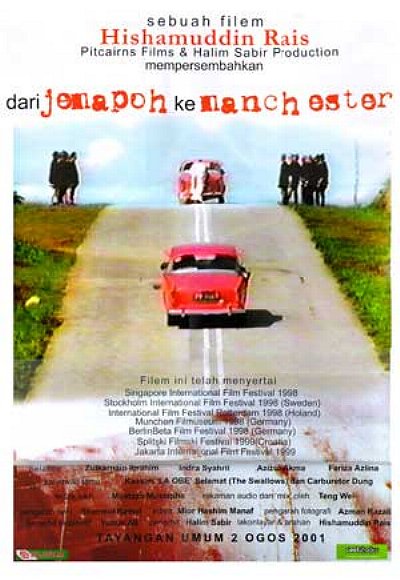
The two principal characters in the 1998 film about Malay mobility, Dari Jemapoh ke Manchester, (https://iffr.com/en/1999/films/from-jemapoh-to-manchester) hint at latent homosexuality.[iv]
Mafiz is in search of his seafaring father whose last contact with rural Jemapoh was a postcard sent from Liverpool in the 1960s. 
Yadi clearly has a crush on the superstar Manchester United footballer, George Best, and becomes jealous of the female friends that Mafiz makes as they try to make their way to England.
The implication of this, of course, is that there were surely also some seamen from Southeast Asia who stayed in Liverpool because of other men.

 Tim Bunnell, January 2019. 
 http://profile.nus.edu.sg/fass/geotgb/stf_geotgb.htm


NOTES
[i]
See for example the 1941 crew list for the former ship of that name: Cingalese Prince, https://uboat.net/allies/merchants/crews/ship1119.html, accessed 12 December 2018. Three of the men who died aboard that ship when it was torpedoed in September 1941 were, like Mat Nor, born in Malacca.
[ii] See Diane Frost’s book, Work and Community among West African Migrant Workers since the Nineteenth Century (Liverpool University Press, 1999).
[iii] The term “the other Liverpool” is taken from Tony Lane’s book, Liverpool: City of the Sea (Liverpool University Press, 1997).
[iv] See: Benjamin McKay (2011) “Taking identity on the road: two recent Malaysian films”, in Yeoh Seng Guan and Julian C.H. Lee (eds), Fringe Benefits: Essays and Reflections on Malaysian Arts and Cinema. Petaling Jaya: Strategic Information and Research Development Centre, pp. 3-29.