Showing posts with label women seafarers. Show all posts

Friday, 14 October 2022

Jamaican ship's cook: her poison mystery 1764


 Maybe the mysterious cook previously worked in the Jamaican
canefields, like these women?


It's Black History Month. And here's a newly-found story about a rare BAME woman seafarer. 

So this is about race, gender, ships. It's part of the history of maritime diversity, labour and seafarers' forgotten lives. A fluke and your occupation could affect whether you ever arrived home from the sea. 

Only a fragment about this mysterious West Indian woman can be found. And the same words about her are repeated word for word in seven British newspapers. No more information than that is available. 

The story's a gift for a dramatist with a Sherlock Holmes touch. So I hope someone creative will make fiction from this small seed in the Derby Mercury, 10 Feb 1764. 

'We hear that a whole Ship's Crew, lately arrived from Jamaica, have been poisoned by a Black Woman-Cook they had on board, who after she had committed it, threw herself into the Sea and was drown'd. They are all dead except the Captain and two Men, who are very bad.'

Seven good questions to ask


Q. 1. Why does her story matter?

 A. Because women crew were very unusual.Black women  crew were even more unusual. This is the frst black woman ship's cook I've heard about in 40 years of researching maritime women.

Picture from 'Seamen “Love Their Bellies”: How Blacks Became Ship Cooks'  


Q. 2. How did the ship come to have a woman cook, unusually? 

A. Because a cook was needed. This person was available and affordable. It was was common for cooks to be black or disabled.
(See Guadeloupean William Buckland's story Buckland seacook BAME Maybe another black cook recommended  her. Indeed she may have been the widow of a black cook on board who'd died.  

Want to know more about the brief and late history of women cooks (usually white)? See my book From Cabin 'Boys' to Captains: 250 Years of Women at Sea,pp 214-219. 

This picture from it shows (left) Chief Cook Betty Fitch and Freda Price (right) Second Cook, in the tinned food storeroom on the Langleeclyde c1950. (Courtesy Maud McKibbin). Freda and Betty were highly appreciated for their good cooking.


Q. 3. Why did she poison these men? 

A. If it was deliberate, because she was angry and wanted redress. Revenge? Perhaps the ship was a slaver and she was one of the enslaved people who'd endured a bad voyage and seen her shipmates die. Perhaps someone on board had offended her. by assuming she was sexually available,  or had expressed dislike of food she had cooked?

A. If it was accidental, she might have had been supplied with bad ingredients.


Q.4. Why did she throw herself overboard? 

A. Surely because she knew she would be punished on landing. It was better to end the misery now, and by her own hand.

A. If it was accidental, she might have felt ashamed, and/or feared summary justice. Seafarers could hate bad cooks, because seafaring was hard enough without dismal food.


Q.5. What poison would she have used, if it was deliberate?

A. Women such as her were sometimes doctresses with a knowledge of herbs. Possibly she had a selection of herbs with her. 

A. If the poisoning was accidental, it could have been because the food she was expected to cook had gone off, There were plenty of opportunities were victuals to deteriorate as the 4,000-miles,oyage from Jamaica took between between three  weeks and four months depending on winds etc. 


Q.6. Why didn't everyone die?

A.  Possibly because the cook was given two lots of ingredients to cook, and those for the crew were inferior to the officers' rations. This status difference would not be unusual.

A.  Perhaps, if the poisoning was deliberate, she was targetting lower-decks crew, not officers.

Q. 7. So what else should we be asking about her?

A. All we can!


Pic shows sentimentalised version of a black male cook, with ayah and white girl on Victorian ship.


This story was drawn to my attention to John D Ellis. I thank him very much for his generosity in sharing it, and many other stories too. John is working on the history of black people in the armed services. Some of his work can be seen at https://www.historycalroots.com


Wednesday, 2 May 2018

World's first all-women tugboat crew - one week old


Marine engineer Kelsie MacLean (left) and deckhand Jocelyn Smith pull down the gangway as they work aboard the Atlantic Willow on Wednesday afternoon. (RYAN TAPLIN / Staff)


This is the straight lift of a story that broke yesterday, about the three women who work and live aboard the Atlantic Willow tug in Halifax, Nova Scotia.
Tugboat women are still rare in every country. An all-woman tugboat crew is even more rare. It's still likely that some traditionalists elsewhere may not want their vessels tugged by such a team, or only want them for the novelty.

Francis Campbell wrote this story, which appears in The Chronicle Herald, the biggest independently-owned newspaper in Canada. The accompanying video of them can be seen, too, at http://thechronicleherald.ca/business/1567431-video-halifax-tugboat-with-all-female-crew-like-a-family.
(I've inserted some side-headings and extra pictures for easy reading, and an addendum.)


THIS MAKESHIFT FAMILY REALLY PULLS TOGETHER


THE TUGMASTER'S VIEW
“We’re a team but it’s also like a family here,” tug master Andrea MacDonald said of the non-traditional, all-woman crew who work the bridge, engine room and deck of the Atlantic Willow as it chugs and tugs around Halifax Harbour and beyond.
“It’s going well,” MacDonald, 50, said of her newly assembled tugboat crew of engineer Kelsie MacLean, 23, and deckhand Jocelyn Smith, 29.“We live together. This is home. It’s more comfortable, if you need to get up in the middle of the night, to have all women on board. We were really excited to have the three of us on board. We were all a little curious, even I was thinking, 'Wow, this is going to be different.’ Three women, OK, this has never been done before.
“We are getting along very well, the jobs are all getting done, everything is working fine.” Even a makeshift family that works one of the four harbour tugs operated by Atlantic Towing requires a modicum of structure.
“I’m like the boat mom,” said MacDonald.Like any mom, she shares tidbits of little-known information about her crew.“On Saturday morning, we brought in a tanker in the middle of a thunder and lightning storm. Jocelyn doesn’t like lightning. She was not happy.”


Tugmaster Andrea MacDonald poses for a photo aboard the Atlantic Willow on Wednesday afternoon. The Willow features an all-female crew of MacDonald, engineer Kelsie MacLean and deckhand Jocelyn Smith. (RYAN TAPLIN / Staff)


THE TEAM'S ENGINEER

And what about Kelsie [Maclean], the newest family member brought into the fold just last week? “Even though Kelsie’s only been here a week, I can already tell you some of her idiosyncrasies. I’m starting to learn what she’s like first thing in the morning, in the middle of the night. She’s not a morning person. If you were here at six this morning to see her rolling out, I said ‘good morning’ because I am a morning person. She knows that. She just went ‘mmmm.’” Mornings might not be her thing but MacLean said she has sea salt in her blood.
“I could not imagine living anywhere that is not near water,” said MacLean, who grew up in Marion Bridge on the Mira River in Cape Breton. “My grandfather is a fisherman out of Gabarus. My great-grandfather, I can remember his whole dining room was filled with model ships. That was my favourite place to go, in that little room, but I was little and my mother always scooted me out because she didn’t want me to break them.”
Having studied at the Nautical Institute in Port Hawkesbury, MacLean is now more into fixing things, including the two 16-cylinder marine diesel engines that she monitors in the engine room of the 95-foot Willow.


The Nautical Institute in Port Hawkesbury where MacLean trained

“Fixing everything that breaks, running the engines, doing the maintenance on all the engines and every system we have on the boat, including our domestic systems, like our sewage and our pot water,” MacLean said of her duties. “Literally everything.”
The tug has an unmanned engine room and alarm panels warn MacLean to immediately go below if anything demands her attention. In the interim, she helps Smith on deck.“When we come back in, most of the time we go up with Andrea and have a chat, see the nice views if it is not too foggy,” MacLean said. “There's lots of coffee on board.”


THE DECKHAND'S PERSPECTIVE

[Jocelyn] Smith, who lives in Dartmouth, started working in construction but was looking for lighter work.“I like manual labour so this is good for me,” said Smith. “My father is an engineer on one of the other tugs. He got me involved in this.”
The Willow works the harbour primarily but it also makes some long trips to Sheet Harbour.“Six hours there, six hours back and the time to do the job,” said Smith.
The crew works a 14-day rotation, living on the boat and ready 24-7 to chug into action in rain, snow, sleet or freezing weather. “We were looking like a Popsicle after one of those (winter) Sheet Harbour trips,” Smith said.
Smith said her duties include maintaining the tug, putting the line out for ship assist, releasing all the mooring lines, and doing the bulk of the cooking, cleaning and painting.

Atlantic Towing company in action:http://atlantictowing.com/atlantic-towing-marine-services.aspx

FIRST OF ITS KIND?
The all-female tugboat no doubt looks cleaner and smells fresher than her sister tugs manned by males. Sitting in the Willow’s control room at the Woodside dock in Dartmouth, MacDonald repeats a company suggestion that the all-female tugboat crew might be the first of its kind anywhere.
“This is very much a male-dominated industry,” she said. “This type of work is not for the faint of heart. It’s rough. It’s very technical. There is a lot of strain on these lines. We’re just a small boat going alongside these huge moving ships, sometimes at a considerable speed. We’ve got to get in there and get lines on them. It’s quite a job and it’s not something a lot of women think of doing for a career, but it’s certainly very doable.”
MacDonald grew up in Purcells Cove, attained two degrees from Dalhousie and worked for many years in the insurance business before putting her mind to what she loves — the water and working on boats. She’s heard men dismiss her as inferior because of her gender.
“I just smile and say, ‘I’m sorry you feel that way.’ As time goes on and there are more of us coming into the industry and as we stay in the industry, I’m finding that the men are starting to change their minds and they are being much more accepting of women on these boats. And even encouraging.”


STAYING TOGETHER

She likens her control centre to a video game, with three screens — a chart plotter, radar and engine information — and two joysticks that control the Z-drives, or azimuth thrusters, propeller pods that can rotate 360 degrees, allowing for rapid changes in speed and direction.
Pushing and pulling gigantic ships into port and through narrow channels, the female crew pulls closer together as a family each day. MacDonald said it’s the Irving-owned towing company’s decision as to whether the crew stays together.
“We certainly hope that we will stay together because it’s a good thing and it’s really cool. Fingers are crossed that we all stay together.”

----------

ADDENDDUM: WOMEN & TUGS IN HISTORICAL CONTEXT

Captain Annie Brennan (Madge Dressler) handles her family aboard her tug Narcissus. Pic courtesy of Doctor Macro's High Resolution Movie Scans: http://www.doctormacro.com/Images/Posters/T/Poster%20-%20Tugboat%20Annie_04.jpg

The most famous woman working a tug is, of course, a fictional one: 'Tugboat Annie' from the 1920s stories of Norman Reilly Raine and the subsequent movies and TV series.
Annie, played by Marie Dressler became a byword for a quarrelsome mouthy older woman operating in man's world and not being properly 'feminine'. Luckily that was so long ago that none of the Willow's team will have face this stereotype.
The main thing that the Atlantic Willow and Annie's celluloid family team have in common is that they are operating in a tough world.
Thea Foss of Tacoma, Washington and Kate A. Sutton of the Providence Steamboat Company are said to be Raine's real models. In fact neither was seagoing. Foss was an owner. Sutton was a secretary and dispatcher.


Tuesday, 6 October 2015

Dates for your diary 2015-16: my talks and papers

I will be speaking about maritime history in its broadest sense at the following events in late 2015-2016.

9 Nov 2015, Marsden, West Yorkshire.
Ayahs who travelled: Indian nannies’ voyages to Britain 1850s-1920s.
Marsden History Society, Mechanics Institute, Peel Street, Marsden. 7.30 pm. Cost £2.


14 Dec 2015, Turn, Italy.
When the ‘ladies’ took to loading: a preliminary survey of gendered stevedoring practices in history
and
Pioneering sea women: what helped them break through – and climb to the top.
At the maritime section of the first Conference of the European Labour History Network (ELHN), afternoon session.

Jan 11 2016, Hull. Women on the bridge: 150 years of patchy progress in equal opportunities in maritime work, 1855-2015.
Maritime Historical Studies Centre, Blaydes House, High Street, Hull, 6pm. Cost free.

4 Feb 2016, London. Hilarious Seasickness: Comic Postcards' Take on Travel's Costs, 1900-1950.
At King's Maritime History Seminar, at 17:15 in Room K6.07, Dept of War Studies, Kings College London, Strand, London WC2R 2LS (6th Floor, King’s Building). Cost free.

26-27 Feb 2016. Manchester. Cabin ‘boys’: cross-dressed women seafarers and their sexualities
and
a master class jointly with Emma Vickers:Doing Oral history with LGBT interviewees at Imperial War Museum North.
LGBT History Festival. Exact slots tbc. http://lgbthistorymonth.org.uk/

Saturday, 3 January 2015

Ghana's pioneering seawomen

Ghana's seawomen's recent history newly appears in an-online dissertation by Hannah Aba Aggrey.

1976: women cadets sought
Hannah writes that in 1976 'The national shipping line (Black Star Line) in conjunction with the Regional
Maritime Academy (pictured)(then Ghana Nautical College) advertised for recruitment of women cadets into the Merchant Navy...
'Three ladies had the chance, after the entrance examination and interview. They were sponsored by Black Star Line. The following year the number increased to four, two nautical and two radio officers, with sponsorship from Black Star Line and Post and Telecommunication Cooperation.
'This was because of the government’s appeal for funds for cadets in the merchant navy ... the government’s plan was to encourage as large a number of women as possible into this profession.'
Hannah Aba Aggrey wrote the dissertation in 2000, 'Women in the maritime industry: A review of female participation, and their role in Maritime Education and Training (MET) in the 21st century' for her M.Sc in Maritime Education and Training (Nautical).
Very interestingly the dissertation shows how much these women were products of Malmo's World Maritime University, and sets them in a world context of the 1990s.(dlib.wmu.se/jspui/bitstream/123456789/569/1/14002.pdf.)


Captain Beatrice Vormawah

Captain Beatrice Vormawah (1956 -)(pictured above) in 1996 became Ghana's first female captain and the world's only black woman sea captain.
In 1976 this daughter of a civil servant and trader was one of those three young women who joined Ghana's Regional Maritime Academy on scholarship.
As a deck cadet she worked on the Pequa River.David O'Reilly's 1996 Philadelphia Inquirer interview ( http://articles.philly.com/1996-02-12/news/25656048_1_ivory-coast-captain-tonnage)quotes her as saying:
`Most men were skeptical ... They gave us cooperation because they thought: "Oh, they'll find husbands and get pregnant and finish halfway." We proved them wrong.'
She got her master's certificate in 1990 and her first command in 1995.
The Philadelphia Inquirer goes on to report that 'Despite the initial skepticism of some men, Vormawah - the only woman among the 44-member crew - says she has encountered almost no sexist prejudice in her career.
'"In Ghana, we don't discriminate much. We are all given a chance."
'"Besides, she says, "nobody can determine your destiny. Nobody makes a straight line for you. Whatever you turn out is up to you."'
By June 2000 she was a Technical Officer at the Cargoes and Facilitation Section of the IMO.Today she's in Croydon as the Head of the TC Implementation Co-ordination Section, Maritime Safety Division at International Maritime Organization.
(Captain Beatrice can be heard describing her career in a podcast: http://www.imo.org/…/Multim…/AudioPodcast/Pages/Default.aspx)


Ghana Ports and Harbours Authority

Hannah wrote that in 2000 a number of women were doing maritime-related shore jobs, working for Ghana Ports and Harbours Authority. They included:
~ Rose Karikari Anang (pictured below) who was Chief of Personnel & Administration (and is now the Executive Director of the Ghana Employers' Association)
~ Alice Enyonam Torkornoo, manager for the training department of GPHA
~ Esther Gyebi-Dorkor,Senior Marketing Officer


And more women ...
~ Freda Ussher-Dennis was the Executive Secretary of the Shipowners’ and Agents Association of Ghana
~ Patience Amoabeng-Prah was the Shipping Superintendent (Shipping master) of the port of Tema

Ghana's maritime women today
It would be fascinating is someone in Ghana could now write the history of what happened in the last fourteen years. What happened to these women?
Naa Densua Aryeetey, who in 2010 became the president of WISTA Ghana (Women International Shipping and Trading Association) (pictured above) gave a paper: 'Integrating women into Ghana's maritime industry through strategic recruitment and empowerment' (at the Maritime Women Global Leadership conference, World Maritime University, Malmo, in April 2014.)
It argued that women are 'still under-represented in most operational aspects of the industry and hardly visible at the decision-making level.'
What happened to Captain Beatrice's rosy picture? Did many many more young women in Ghana step forward and begin working at sea and in the maritime industry, and then what got in their way?


Sunday, 30 November 2014

Pioneering woman of the sea dies: Margaret Newcombe

Margaret Newcombe on the 'Britannic' in 1951 with colleagues Brent and Peter and another (details unknown).

Doyenne and pioneer of social directresses at sea Margaret Newcombe died on November 14.

Margaret(1922-2014) is not someone you find when you google her name. But in the world of Cunard shipping she is a legend.
Her charm earlier this year, when I interviewed her, was as remarkable and real as it must have been for the last half century. It astonished me. I'd expected her to be intimidating or a bit visibly ‘good at people.’
In fact I was disarmed and truly warmed. I'd never before experienced such genuine graciousness. And people at sea had been basking in that for over half a century.

TRACING HER JOB'S HISTORY
It was only in the interwar war that ships seeking happy (therefore repeat) customers started employing men as entertainment/cruise directors.
Before that the job had been done by Junior Assistant Pursers with microphone skills and a flair for Ents. They worked with the ad hoc sports and social committee that the passengers organised each voyage. On emigrant ships to the Antipodes in the 1950s the job had been partly done by ‘liaison officers’ employed by the receiving countries.
In the 1950s all the competition from commercial flying meant new customers had to be wooed. ‘It was necessary that shipping lines … [put] more accent upon entertaining the passengers than they had in the past,’ Margaret told interviewer Sheila Jemima of Southampton Oral History project.
Social hostesses began to work with entertainment/cruise directors (although Hilda James was a pioneer in the 1920s).


Olympic swimming star Hilda James (1904-82)in 1923 joined the 'Franconia' as Cunard's first social hostess and continued to do work rather like Margaret's for several years on other Cunard vessels. The job then seemed to disappear until the 1950s. [With appreciation for the picture to her grandson Ian McAllister who wrote her biography: http://www.lostolympics.co.uk/]

Margaret thought the job partly emerged because ’someone with sense in the office must have said “Someone must take care of the ladies, the lonely hearts. Make them happy. Introduce them.”’
A social directress managed the social hostesses, of whom there might be several depending on the ship's size and route. At a time when women officers were still rare, the idea of a senior woman organising the social life on ships was even rarer. Margaret was Cunard’s pioneer in this.

THE RIGHT WOMAN FOR THE NEW ROLE
How do you get such a job, social directress? In Margaret’s case it was partly because she was already in the purser’s bureau. It’s the department of the ship now called ‘hotel’ that deals with passenger activities. Her skills were evident.
In WW2 she’d done welfare work with women in the ATS. And as a girl she’d been used to being sociable – her father was a vicar. (In his role at the local aeronautical club he’d introduced her to that inspiring pioneering flyer Amy Johnson – and been rather put out that Amy ignored her.)
Margaret at Hull Cenotaph in 1926, where her father was conducting the service.

After the war’s end she badly longed to go to sea, as a purser. So many ex-servicewomen felt the same urge. It was the start of Wrens becoming the first women pursers, and cabin crew.
Margaret nearly didn’t get work on a ship at all. So many young women were told ‘girls don’t do that sort of work at sea.’ It was persistence, happenstance and luck that did it, as well as ability, of course. This is how Margaret too succeeded.
In 1947 she’d been employed by the electricity company in her native Hull and applied to every possible shipping company for jobs. Cunard wrote back saying ‘Dear Sir, We don’t employ ladies.’
But then a year later by chance she saw a newspaper picture of Elizabeth Sayers and three other women doing pursering work. Elizabeth Sayers (1912-c2000) had been a Wren Officer with Mountbatten in WW2 before joining Cunard in 1948 as a Lady Assistant Purser. She then became a beacon for Margaret and others.


Margaret's beacon: Elizabeth Sayers, and L to R some of Cunard's other pioneering LAPs: Margaret Morton, Phyllis Davies and Mary Marchant. (With appreciation for the picture to www.liverpool ships.org.)

‘So I wrote back to Cunard and said “Dear Sir, you do.” And within a month I was out of my [old] job and into the seagoing experience,’ says Margaret.
As a Lady Assistant Purser (LAP) she sailed mainly to New York in the 1950s. She worked in the ship’s travel bureau until ‘things were getting a bit monotonous [so] they said would I like to be social directress.
‘And so I was able to change my duties and have a new interest … I’ve gone from pen and paper to song and dance.’
By now Cunard had ‘introduced what they called the cruise director and his staff.’ She was the right-hand person of this man, and the first social directress of the Queen Mary.
And ‘for the next seventeen years that’s what I was doing on the three queens: Queen Mary until she went to Long Beach, Queen Elizabeth for one year, and the QE2.’ Margaret also went cruising on Caronia, Britannic and others.

Margaret (right, in background) on the 'Britannic' with colleagues in 1951. Note one other woman. Women pursers were usually outnumbered by at least five to one in that period. Expected to marry and leave (there was a marriage bar), they seldom got promoted, weren't sent on courses like the men and were treated as a separate category, which probably meant a lower pay scale.

ENRICHING LIVES
Nicknamed ‘Dame Margaret’ and often taken to be a member of the peerage, she enriched thousands of passengers’ voyages on many ships - and had a great time as well.
‘I was enjoying myself. I like people, I'm a bit of a show-off and I like giving passengers everything they wanted. I don’t put myself forward but I enjoy them.’
She sailed for 28 years until retiring in 1977. ‘I thought it was time I put my roots down.’
She went to live with an aunt in Torquay, but found it very hard because ‘I was so used to being amongst people, knowing them.’
After three years her aunt died. Margaret moved to a flat overlooking vast fields at Milford on Sea in Hampshire ‘because I had lot of friends here.’
Her Cunard shipmates met regularly at reunions. And they gathered for her funeral at Bournemouth Crematorium on November 28: a network of people who loved her and looked after her, particularly as her health declined in the last few years.

HER LEGACY
Since the 1990s a few women have become cruise directors, senior executives with four gold stripes. They may never have met Margaret.
But in the patchy progress of shipping lines accepting women in senior entertainment positions she’d been their crucial predecessor in showing that women really could be entrusted to cut that mustard, and be truly respect-worthy.

ENJOYING THE WORLD
I think Margaret, a modest and grounded person, would not much want to be remembered as a model for women attaining new careers at sea.
She’d prefer to be recalled as someone who made people’s voyages enjoyable – and who herself traveled delightedly round the world again and again on some of the most exciting ships in the world.

--
(Margaret was interviewed by Sheila Jemima, no date but circa 1992, and the recording (M0100)is available at Southampton City Archive. My own interview with Margaret was on 9 January 2014 and was unrecorded.Since then we spoke by phone and letter. She kindly let me copy these three photos, for my forthcoming book on the history of women working at sea.)

Monday, 28 July 2014

Sarah West: power, sex and sensible attitudes towards gender

This weekend one pioneering woman's new relationship (and that's "relationship" with a question mark after it, nothing's proven) has gone viral.
Or rather it's gone as viral-ish as is possible given that her employers have issued only three sentences about it.
A Royal Navy spokesperson said of Commander Sarah West, the first woman commander of any major Royal Navy battleship: "We are aware of an allegation of a breach of the code of social conduct on board HMS Portland, which we are treating seriously.
"Anyone who is found to fall short of the Royal Navy's high standards can expect to face appropriate action. It would be inappropriate to comment further."
Commander West, 42, from Isleworth, has had to leave her vessel, a Type 23 frigate, because it's been claimed she's had an affair with someone else on board.

Officers are allowed to have relationships if:
~ they don't undermine 'trust and cohesion'
~ They don't damage operational effectiveness

What now?

The next step will be for her superiors to discern whether this has happened: a kind of inquiry.
If 'found guilty' Commander West will face a range of moves including:
~ formal warning
~ reassignment to other duties
~ the end of her service
Implicitly media speculation is "Will she lose her job with ignominy and scandal?"

The point is rather what does this event and its coverage say about gendered attitudes towards women? Specifically, what does it reveal about attitudes towards women newly in power within institutions that for centuries have been male both in culture and in complement?
Once (shore) women were seen be a force that could distract seafarers from their duty and career.


Taken to be symptomatic?

The problem is that any publicity about this gives fuel to reactionary arguments along the lines of "See. We told you. Putting women on ships can only lead to one thing. Illicit sex. Even women at the top succumb. Keep 'em ashore."
Merchant navy women have been becoming deck officers since the 1970s, against the odds. In interviewing them for my current book they repeatedly talk about the strain of knowing that if they make a slip - indeed, if they do almost anything - then ALL women in their position are judged by that.
When women seafarers - who are now 13 per cent of the merchant navy - do something not quite right it's never seen as simply an individual's one-off action, as it would be if a man had done it. No-one says "See! That proves all men of 35 with grey eyes and a mole on their left shoulder shouldn't work at sea at all." Instead people would just shrug:"Oh, Geoff's slipped up on this one."
By contrast, a woman's action is still taken as irrefutable proof of one gender's intrinsic unsuitability for sea work. Ever. And as for someone in command being fallible...!
Women seafarers - and most pioneers doing "men's" jobs - find they are critiqued earlier, and for far more minor infringements, then men. Critics lurk, waiting for failure, so that they can argue that the old gender imbalance (men in charge/women in support) needs restoring.
Can it be rivalry and deep insecurities about gender that motivate people who grass up a shipmate? What are they doing causing trouble in that tiny space where solidarity is so crucial - and so tricky?

An old objection
Sarah West's situation, as represented, is not only typical of attitudes towards women working on ships in general.
The story of sexual activity as a hot issue on royal and merchant navy ships is hundreds of years old. For centuries it's been argued that having women aboard brings trouble, including rivalry about who has sexual access to whom.

In fact, it is gendered attitudes towards women and towards sex that are the problem. It's not a problem that women per se are on board.

The royal navy dealt with it by, at times, only allowing women (variously 'good' wives and 'bad' sex industry workers) on board a ship if it was in port, not sailing. Or turning a blind eye to women's existence.
And sexual activity on RN ships was always controversial. Nineteenth century opponents argued on the hand that the Admiralty was allowing the navy to be "brothelized". But permissive commanders contended that if you didn't allow press-ganged men their 'recreation' they'd mutiny.
Nobody's sure how much homosexual sex really occurred and if it really did sap morals.

Clearly sex on ships is a subject that needs thorough, wise, and un-bigoted airing.

The merchant navy's past attitudes towards sex on ships has included only employing mature and motherly-looking women, preferably wives of men already employed aboard. Some shipping line personnel officers deliberately rostered camp gay males as cabin stewards, on the grounds that then women passengers wouldn't be bothered by heterosexual advances from crew.
People keep relationships secret, certainly from head offices ashore. When found out, it was usually the case that the woman, not the man, was moved to another ship. She was quietly seen as the more culpable one.
Women today on merchant ships often deliberately chose not to have relationships with shipmates because it's too difficult. It's too gossiped-about; the team tensions it can cause are tedious, especially if you break up in mid-voyage; and if you then take up with another partner on that same voyage you can be branded as slag and traitor.

When women were allowed to sail in RN ships from 1990, some naval wives protested that adultery would inevitably ensue. Ex-Wrens told me most heatedly that of course there would be trouble: in a tin box full of testosterone-fuelled young men, rampant sex must be the outcome.
The women sailors themselves replied 'Eh? Why? We've already got our own partners already, ashore, actually.' And among the 3,150 in today's navy (9 per cent) a number of women on ships have relationships with each other.
Cartoonist Smiles(the late Charles Smiles) made the implicit point (see cartoon below)that when women sailors were revealed to have agency and be actively desirous it changed the position of male sailors as the more powerful, knowing gender on the ship.

CAPTION: "They have to go through your [the women's] messdeck and they might see the pinups!" Cartoon by Smiles, Navy News, Nov 1990

As part of the preparation for writing my next book, on women and the Royal Navy, I've been collecting newspaper cuttings on cases of women sailors who've come up against male shipmates' sexualised and discriminatory attitudes.
Given the RN's impressive record of struggling to be a truly equal opportunities employer it would be invidious to list these. I'll just say that included in that picture are cases of rape (which are dealt with very firmly), but also a very noticeable decline in stories about sexist behaviour these days. Even tabloids can't find stories of the 'HMS Lusty' kind.
The RN's record of good gender discrimination policies - and policies firmly enforced - is much better than the MN's. And women officers appear to be well-respected. I don't believe this picture is just a matter of better silencing of accounts of discrimination. It's real.
But old attitudes towards women and their sexual activity take much uprooting.

So...
It's no fluke that in the weekend newspapers there's another gender-related story along with Sarah West's: the Archbishop of Canterbury's letter to the Pope acknowledging that the recent vote supporting the ordination of women bishops is a problem (but urging that it not be).

Religious life is simply another key area where we see that major, male-led, institutions are troubled by the idea of women having power - and behaving differently. Gender divisions are still a problem. But decades of solid evidence proves that gender does not have to be an obstacle on ships.


As male masters in both navies repeatedly agree after they've had real experience of women working on board, most women are assets to be prized for their diligence, creative problem-solving and team-bonding skills.
Once-sceptical WW2 officers enthusiastically asked for more Wrens, not fewer, when they'd seen the usefulness of the Real McCoy.
Post-1970s MN masters repeatedly say that women can be even better seafarers than men.
They are a precious resource and that was recognised by the RN in 1997 when it first employed women commanders for ships, to some shock.
See Smiles' cartoon below, Navy News, March 1998:
"Hey Chief! There's a lady in the skipper's cabin!" "You're right on both counts, my flower!"


So what if some people sometimes have on-board affairs.
In both navies attitudes towards on-board relationships may yet take a few more decades to sort out. But why waste good personnel over trivial matters?
And when ever did a male commander get ditched because he loved unwisely?
I can think of two appropriate adages.
1. Let good people get on with doing their jobs.
2. And judge everyone on their own merits, not on supposed gender characteristics. This matter must not lead to the Navy hesitating over appointing more women to positions of command.

Tuesday, 8 July 2014

Chinese women sailors in navy

Since writing a few days ago about Soviet women sailors, this 2013 article about Chinese women seafarers has been drawn to my attention. I'm re-posting part of it here, plus the link (http://english.peopledaily.com.cn/90786/8133836.html)and some extra pictures.
(It's worth saying that earlier Chinese history women sailing on, and even commanding, 19C pirate vessels, and Sisters nursing on naval hospital ships in WW2. They don't seem to have been ordinary merchant seafarers as the post-1930s Soviet women were.)

"
Chronicle of events of Chinese female sailors on warships

● In 1991, a hospital ship of the South China Sea Fleet of the People's Liberation Army (PLA) Navy carrying 17 servicewomen made a round of visits to the Nansha Islands in South China Sea. This is the first time for the Chinese naval servicewomen to carry out tasks along with a ship.

●In 2002, four servicewomen participated in the first around-the-world voyage of the PLA Navy.
Since December 2008, many batches of female sailors of the PLA Navy have participated in the escort mission in the Gulf of Aden. Previously, they had mainly undertaken such service and support work as medical treatment, translation and culture.

● In 2010, 14 female soldiers were temporarily assigned to the combat duty posts of signal, radar, steering and boatswain of the Chinese naval escort ships in the Gulf of Aden.

● In March 2010, the first female sailor training team was founded at a training base of the North China Sea Fleet of the PLA Navy. After a five-month-long training, the first batch of 24 female sailors acquired at least eight professional skills including damage control, knotting and chemical defense of surface ships, and became the first batch of female sailors of the PLA Navy.

● In September 2012, the PLA Navy attempted to expand the service scope of female soldiers in surface ship units, and gradually established and improved the system and measures for organization and equipment, education and training, and management and support of female soldiers."
--
Female soldiers in China-Russia joint drill come into focus
(Xinhua) 08:25, July 15, 2013


"Female sailors of Chinese Navy participate in escort mission in Gulf of Aden
(People's Daily Online November 05, 2013).Female sailors of the 'Jinggangshan' ship under the escort taskforce of the Navy of the Chinese People's Liberation Army (PLA) are holding combat positions in escort mission in Gulf of Aden.They have completed the training of common subjects, such as seamanship, damage control and battlefield rescue, and professional subjects, such as navigation, radio operation and signal."


Sunday, 4 May 2014

Women on British submarines, at last!

From the left: Lieutenants Maxine Stiles, Alex Olsson, and Penny Thackray raise their glasses for the traditional rum tot, with the silver dolphin badge which newly-qualified submariners have to catch in their teeth at this traditional ceremony. (Pic by Thomas McDonald, Sunday Times)

Yes, at last! The first three Royal Navy women to train for submarines have just completed their one-year training course. (And yes, there are still subs left in the fleet - 4 nuclear ones.

Now the lieutenants will serve in Vanguard-class submarines.They've just finished the final part of their training, on HMS Vigilant.

Their graduation will mean they can now go on duty for up to three months at a time, only emerging from deep sea in ports.

THE PIONEERS
- Penny Thackray, 39, from Sheffield: will be training submariners
- Alex Olsson, 26, from Wirral, weapons engineer officer.
- Penny Stiles, 29, from Manchester, logistics officer

It's going to cost money to convert the subs. (Yes, it's the old 'Oh no, we're going to have to find space for segregated toilets' story.) £3 million. It does make you wonder why sensible people didn't design subs for any gender, in the first place. After all, Canadians have had women serving on subs for 14 years now.

Read more at http://www.thesundaytimes.co.uk/sto/news/article1407042.ece and http://www.plymouthherald.co.uk/Women-qualify-join-submarines-time/story-21055277-detail/story.html


REACTIONS
When the news of these plans came out in December 2011 there was a lot of bigot-blogging about 'wasting public money' and 'Why aren't they at home having babies?' Well, why aren't idiotic reactionaries at home having new brains inserted?

I hope these women give lots of interviews this week so that they educate the public about how it actually is. You're a professional. You go to work. You do your job. End of.

Defence Secretary Phillip Hammond affirmed it as 'not only a huge personal achievement for these three outstanding officers ... but also an historic moment for the Royal Navy and our armed forces.'

Women and submarines in the past.

# WW1 and WW2,: women in shipyards helped make and repair subs and their equipment, including radios

# In WW1 Wrens were pictured standing triumphantly on a captured U-boat. The image was used to rub salt into the wound,: not just captured but stood on by women!

# In WW2 22 Wrens on the Aguila were attacked and killed by a U-boat in 1941. Many of the 20,00-plus servicewomen going on overseas assignments were menaced by U-boats.

# In WW2 women didn't sail on subs, or warships.

# In the Cold War wives of submariners endured sometimes months of radio silence. They include one woman I interviewed who had had a nervous breakdown because she just couldn't cope alone with her first baby being born without support. Her husband didn't surface for months.

# They work in the submarine museum at Gosport, so they know their sub history.

# British naval women have been pressing for this stage for over a decade. Some women overseas are still prevented from serving on subs. It's a last bastion of inequality, sometimes cloaked as gallantry
--
The best women-undersea story
British women passengers probably had more experience being on U-boats than on British subs. In both wars German U-boat crews behaved with gallantry towards the women they discovered they'd attacked.

When U-156 sunk the Laconia in 1942 extraordinarily commander Werner Hartenstein took five rescued woman on board. They were given officers’ bunks to sleep on, and plenty of food.

Blanche Allan was initially 'terrified ... it was stifling inside, a long oven-like corridor of winding pipes, wheels and dials....

'We were too scared to ...[sleep] alone [and so shared bunks] Anyway it was hard to sleep because of the noise and the heat.'

They were aboard the submarine for four days and were submerged for 'two of the most anxious hours I have ever spent ... [but when finally released] the U-boat captain, still a model of courtesy, again apologised for the inconvenience caused us, and wishes us a safe return.'

Friday, 14 February 2014

First woman ship’s doctor born - and died - today

99 years ago today, on February 14 1915 Dr Elizabeth Ness MacBean Ross died in Kragujevatz, Servia (now Serbia) at the First Military Reserve Hospital.
She'd been working less than three weeks on typhus wards. It was her 37th birthday.
This very day she is still being celebrated in Serbia. And her biographer Louise Miller is there to join in.

Dr Ross broke a British precedent and become the first female ship’s doctor less than two years earlier. (The next woman doctor, Wynne O’Mara, didn’t go up a gangway to work until the 1950s – imagining she was the pathbreaker.)

SS Nigaristan
Elizabeth Ross first contributed her skills as a ship’s surgeon in February 1913 when she sailed from Madras to London on the SS Nigaristan (see picture). It’s said that she ‘performed duties as ship’s doctor’. I don’t yet know if she was officially employed in that capacity – this is still on-going research.

SS Glenlogan
But she was definitely employed for her job on the Glenloganthat summer. She sailed from Scotland to Kobe, Yokohama and Hong Kong, leaving on July 10 1913. It was for just one return trip on the small, slow and old cargo ship.
'Heretofore it has not been considered that the steamship offers much scope for lady doctors' said the Telegraph, announcing the breakthrough. It was a major understatement, given the discrimination shipping companies then practised.
Females were welcomed as nurses, especially if they’d just sail at stewardesses’ (lower) pay rates. But doctors were always male.

How come the breakthrough?
So how did Dr Ross break that mould? First, a doctor was urgently needed . ‘A Glen line ship taking emigrants to Australia was waiting at the Tail of the Bank, [Upper Clyde) but the Board of Trade official couldn't allow the ship to sail because there was no surgeon aboard,' reported the Telegraph.
Secondly, she was available and suitably qualified. Shipping companies liked their staff to be well-traveled, mature and highly competent. And officers loved interesting traveling companions to while away slow trips. She had great stories to tell of her time in what is now Iran as ‘the Chieftainness of a Persian Tribe’and doctor.

How did she sail?

Probably with great confidence, because of her context. She’d benefited from studying medicine at Queen Margaret College, the first women-only higher education institution in Scotland, a kind of equivalent of Girton. It was financed by Isabella Elder, the philanthropic wife of shipbuilder John Elder.

What was Dr Ross’s journey like?
We don’t know because her correspondence didn’t say much. According to her family, 'She loved it'. It was slow.
As she was on a cargo ship it was varied (the freight always affects the voyage eg hides were accompanied by fleas).
She was feted in foreign ports and seemingly she had concocted a suitable uniform, as women pioneers did.
Doctors anyway had a cabin to themselves. So there wouldn’t have been any awkwardness about where this extraordinary phenomenon – a woman officer - was to sleep.
Captain McGregor told a Hong Kong reporter that contrary to expectations his ‘distinguished lady doctor’ was highly regarded.
‘The Chinese crew on board the ship paid the doctor the greatest respect. Of course, Dr. Ross speaks Persian like a native, and it was a revelation to many on board to see the cordial manner in which Persians at Penang and Singapore greeted her and incited her ashore.’

Did this first women ship’s doctor set a precedent?

Oddly not. A few women doctors were on ships in wartime but only en route to postings, such as Salonika in WW1, or as passengers. They gave medical care when needed but were not ship’s doctors, as such, until the 1950s.
The new post-1950s wave mainly got their opportunities because schools cruises were becoming popular. Women doctors were seen as suited to working with children, because they were less intimidating, more like absent mothers.

More information

I’m writing about Dr Ross and her successors for my new History Press book on women working at sea over the last 250 years.
You can read more about Dr Ross’s impressive life at www.tainmuseum.org.uk/dr._elizabeth_ross_g.asp?page=151‎.
I am indebted to the Ross family, Morag Bremner and Margaret Urquhart at Tain Museum, and Louise Miller for their generous help.


Saturday, 14 December 2013

The lost history of Wrens and QARNNS on battleships in WW2: news of event in Jan 2014

A uniformed service woman on a wartime battleship? Surely it's a seeming contradiction that can't be countenanced, like, for example, Prince William marrying a North Korean barber.

But ... it happened. Royal Navy vessels in WW2 exceptionally carried women as semi-members of the crew. They were either Wrens being evacuated or going out to overseas postings, or naval nurses(QARNNS assisting homeward-bound British Prisoners of Wars as the conflict ended.

WELCOME TO A TALK
On Wednesday January 8 I'm giving a highly illustrated talk on the subject at the National Museum of the Royal Navy in Portsmouth. "Grog, darning and gendered un/welcomes; Wrens and QARNNS nurses on WW2 warships" takes place at 5o'clock and is free. (http://www.nmrn.org.uk/sites/default/files/Research%20Programme%20leaflet%202013-2014.pdf)

In it I'll be looking at the way these women were seen as intruders and anomalies that had to be accommodated into closed and traditional masculine institutions. They were "matter out of place", to use an anthropological concept.

WRENS

Great tension caused by some Wrens who were seen as transgressing gendered boundaries by expecting that if they worked as men did they should also get men’s rewards, including grog. Wrens on warships were positioned as boys (at best) or troublemakers and spoilers to be got rid of (at worst.
But on some more progressive ships officers were proud to flaunt Wrens on deck as they sailed in a celebratory way into the world’s harbours.

QUARNNS
The only accounts of QARNNS on ships show that they were welcomed, and even made honorary members of ship’s companies, because they were not challenging. They sewed for the men and did not expect to be treated as full participants.
In other words, they behaved as lady visitors traditionally did: appreciatively and supportively. The outcome was sometimes marriage.

SO WHAT DOES IT SAY ABOUT GENDERED ATTITUDES?

With what degrees of welcome and dismay were women, as matter out of place and feminised representatives of civilian and domestic life, handled by their hosts?
What place could women negotiate in total institutions geared to war, the support of the status quo, and the avoidance of ‘weak’ emotions?
And what do these cases reveal about women’s and men’s attitudes towards something approximating gender equality?
--
Using concepts such as ‘matter out of place’ (Douglas) and ‘hosts and guests’ in ‘total institutions’ (Goffman) this accessible but scholarly talk explores three recorded cases as examples of possible underlying trends in attitudes towards gender on British warships in WW2.
Why do it? Because during my research into women at sea in both world wars, for a book to be published by Yale University Press next year, I stumbled over these women and found their experience fascinating and telling.
I want to share it with you and anyone who's interested.
Hopefully it will be helpful in understanding naval men's attitudes towards women fifty years later when females were allowed to serve on some warships, as Smiles' cartoon shows (May 2000, Navy News).
The caption reads "The last [HMS] Dauntless had an all-female crew - why not the next?" So far, of course, there has been no all-female warship, although there were many all-male ones.

Friday, 6 December 2013

Sailing through Xmas: women crew and women passengers

Ayah at children's party on ship, 1889. Painting by Godefroy Durand

Christmas on ship for women crew and women passengers in the past has varied depending upon the period and the vessel.
In the early and mid-twentieth century routinely stewardesses on liners and cruise ships decorated the public rooms with paper chains, lanterns and baubles. Sometimes the women passengers helped dress the tree with fairies and tinsel as they might at home. Male passengers didn’t; it seems to have been a feminine rite.

MARY &THE KING'S BROADCAST, WW2
In wartime women and men in the armed forces sometimes were en route to overseas postings during the Yule period. When Territorial Army nurse (TANS) Mary Wrangham Hardy was sailing from the Middle East to Italy on the Melita, just before Christmas 1943:
‘It gave us a strange feeling …. On Christmas Eve everybody collected on one of the decks for carols. Next day we all sat on the steps and the floor to get as near as possible [to the wireless] for the King’s Christmas Broadcast. The reception was perfect – we could hear every word and felt that it was a link with our families at home. ‘

YVONNE IN PARADISE
For other women the principal feeling was not nationalistic nostalgia but wonder at the difference between their usual Christmas in Britain and the possible other versions of it in other countries. Women’s Auxiliary Air Force member Yvonne George loved docking in the Bay of Algiers on Christmas Day 1943.
‘When we saw the view confronting us we all thought we had been transported to Paradise. There before us under bright blue skies with the sun beating down stretched among leafy green trees in the hills where white villas, some looked like palaces all nestling among orange and lemon trees in full blossom with the sweet perfume … permeating the air. Coming direct from the dark gloom of blackened-out England … it seemed to us that we had suddenly fallen on a different planet.’

SENDING A CHRISTMAS MESSAGE
All seafarers are acutely aware that they can’t be with the people they care about back home. Today this can be remedied to some extent by Skype and mobile calls if they can get a signal. (You can’t in always in mid-ocean spaces).
People also phone via satellite communications, such as SAT-M and V-Sat, on bigger ships. Satcomm companies offer cheap rates for festive periods including Eid and Diwali (Quiet Time, Super Quiet Time) because business traffic is less on those days. The more generous shipping companies allow free phone calls and internet access.

http://www.liverpoolmuseums.org.uk/maritime/archive/displays/christmas/

In the past, cards and presents would have been snailmailed many weeks earlier – and wouldn’t necessarily have arrived at the right port on the right day. As on land, women tended to be the ones who organised sending cards; they were not likely to be the recipients to the same extent that men were. Today’s e-cards arrive more reliably -- if you’re within signal range.

FUN,NOT LONELINESS, ON PASSENGER SHIPS
Seafarers, especially young ones, often say that they expected their first Xmas at sea would be lonely and that they’d miss home. But then they actually have a wonderful time. This is not least because operators of cruise ships catering for the West European market put on so many festivities. (Profit-focused, they want passengers to have such a good experience that they come back, ideally with extra paying guests).
And staff are part of that fun, as well as helping organise it as cruise directors, social hostesses, shop assistants etc. Behind the scenes, Christmas is yet another excuse for a boozy staff party in someone’s cabin, although modern prohibitions on crew alcohol consumption mean no one is as legless as they were in fifty years ago.


On the Chusan in the Red Sea in 1955. a woman passenger wrote :
“25 December - went to breakfast and found that a menu and Christmas card was placed for each person. Church service was at 10.30…after lunch walk around the dining room to see the Christmas spread, the amount of work the chef had done, there was a boar’s head, two sucking pigs, a large ham, turkey, Christmas cake, a cake made into a clock and decorations were wonderfully done. After that went up in the lift and there was a piece of mistletoe right in the centre and one of the ship’s officers was standing right under it, when it was pointed out he was in a dangerous spot he quickly moved to the side. Then we heard the Queens speech, we are two hours ahead of English time…
And so to dinner. I wore my spotted cocktail dress and it was very comfortable. We had a super time, three bottles of bubbly, the Chief Radio Officer footing the bill and we wore our hats and were kicking up an awful din blowing whistles and playing the fool generally”.
http://www.poheritage.com/the-collection/galleries/Seasonal-Selections/Christmas-at-Sea.


As in hotels, work doesn’t stop for Bank Holidays. Most seafarers work a seven-day week, every day of a trip. So Xmas means being on duty as on every other day. It’s just that you might wear a pair of fake antlers and a Santa hat in Caribbean sun as the tannoy belts out songs about sleigh bells and you scatter fake snow by the pool.
The carnivalesque tradition of the upper ranks getting waited upon by the lower ranks in a Christmas meal was once a common occurrence.
Secular folks haven’t a snowflake in hell’s chance of avoiding traditions like carols and Christ’s manger if they’re on a British-operated passenger ships. But being in a floating hotel is a very good way to avoid having to cook a turkey and pud for a large family.

NOBODY ABOARD KNOWS WHAT XMAS IS

On tankers and cargo ships chefs used to pull out all the stops to create a festive day. Shipmates made up for the absence of relatives by being each other’s family.
Today almost all non-passenger ships have crews who may not speak English or celebrate Christian and European festivals. So a British person on board can feel lonely. Some ships are dry, too. So the difference to Christmas on land is very marked.

Monday, 17 June 2013

Gender perspective crucial in writing about maritime history

From shore to bridge, outsider to 'Master'.


Marianna Massa has written a useful on-line article about why it is crucial that not just women but gender should be central in writing about maritime history.
'Making the Marginal the Pivotal: The importance of writing maritime history from a "gender perspective"’
is in the online journal (anyone can access it)Blue Stocking. http://blue-stocking.org.uk/2013/03/03/making-the-marginal-the-pivotal-the-importance-of-writing-maritime-history-from-a-gender-perspective

She argues:
'Women have been the ones left behind on the shore looking wistfully at the ocean wondering when their husband will reappear on the horizon; always the supporter of a son’s or a husband’s ambition rather than the pursuer of her own life.
'There are accounts of exceptional women who have ‘set sail’ that aim to challenge this assumption, however, that is exactly what they are: exceptions. A lack of data on women at sea in their various capacities highlights the need for grounded, contextualised analysis in order to deduce patterns in women’s behaviours and their relationship with the sea.
'There cannot be one hegemonic literature regarding maritime history. As Simone de Beauvoir points out, the "othering" of women "tends to cast suspicion upon all the justifications that men have been able to provide for it, because it has not accounted for differences in experience."
'Applying a gender perspective engages women’s histories with the histories written by men and about men. It moves women away from the periphery in order to make a more whole and complete history.
'Applying the category of gender not only reveals women’s relationships with the sea, but also their relationship with men, as a constructed feminine being. It unites the land with the sea, and confronts the hierarchical relations amongst men, women, and different races.'

--

Marianne is right. At the moment I'm interviewing seafaring women pioneers who sailed from the early 1970s.
These women engineers, deck officers, 'floatographers' and pursers weren't waiting politely and prettily on shore for any male relative to return - and then go off again leaving the ladies to pine.
They decided they wanted to sail. Despite all the odds - including careers teachers who said it was impossible and employers who suggested would-be captains should instead become ship's nurses - sail they did.
Women seafarers were enabled partly because of the equal opportunities climate and legislation that were a product of the Women's Liberation Movement. They sailed despite an 'othering' reception along the lines of 'What's a nice girl like you doing on a ship like this (and in boiler suit too)?'
It's clear that their struggle and progression in a maritime career were crucially affected by gendered attitudes and a hierarchy in which women were lesser, other and seen as 'matter out of place.' Many women didn't necessarily recognise these deep gendered currents were going on, and were unfair and inappropriate.
The 'constructed feminine beings' to whom I've been listening with such fascination these last few weeks negotiated a path determined by many factors.
Some were helped by generous male mentors in shipping offices who, as fathers of competent daughters, believed women should have a fair chance at a maritime career.
At times on ships some faced hostile officers who flung missiles at them, groped them, mistrusted their abilities (until proven very wrong), undermined their authority, and with mistaken kindness put up Playgirl posters of studs like Burt Lancaster so that women too could have pin-ups on the workplace bulkheads.
Seagoing women's stories reveal ships as places where 'Woman' was considered to be irrelevant, intruding, and unsuitable. And then real women who pulled their weight and could do their job came to be valued.
Some male shipmates were able to generously say that their ships were far better places when women shared in the daily running. And some women felt a sense of victory when at last their gender was disregarded; the point was that they were seafaring workers who were just very good indeed at doing their job.
I'll be trying to show this in my next book, From Cabin 'Boys' to Captains: A history of women at sea, History Press, 2015.

Monday, 27 May 2013

Patsy Adam-Smith - first Australian woman seagoing wireless operator, 1950s

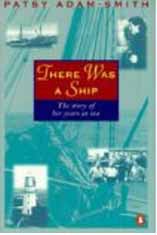
In looking for information about seagoing women Radio Officers I found this touching and lively memoir of a woman sailing round the Bass Strait and Tasmania area 1954-1960. Patsy Adam-Smith, There was a ship, Ringwood, Penguin, Victoria, Australia, 1995 first published 1965.

She was cook, she was on the wheel and she also operated the wireless on the small Naracoopa serving the remote Cape Barren Islands.It's rare evidence of women's seafaring work, because so few women were sailing coastally on cargo ships,in any country, at that time. She wrote:

‘To get a radio operators' certificate [Third Class] didn’t require any excess of intellect, but it did need a lot of courage to get going. The very first time I gave [our]...call sign the Melbourne operator said , "I'm imagining things today, chaps. I thought I heard a woman’s voice calling then, ha ha." It was difficult to call back after that...In time they all got over the shock’ and the operator referred to her as Mam’selle Naracoopa and ordered "Ladies first" if several senders spoke at once when Patsy was trying to transmit. (p171)

By contrast, there seems to have been only one British seagoing 'brass-pounder' at that time:Angela Firman. And she had to sail on Scandinavian vessels as British ones didn't allow women in such roles. Although women could readily acquire the skills to operate wirelesses on land, on ships it was seen as men's high(ish)-tech work

Patsy Adam-Smith (1924-2001), then the mother of a young daughter, became a prolific author. She writes well about life on board, where privacy was so respected that no-one ever asked her 'where's your husband?'

Perhaps the bonus is that she draws attention to a long-forgotten novel that seems to be the seafaring equivalent of DH Lawrence's Lady Chatterley's Lover. Robert Close's Love Me Sailor was prosecuted for obscene libel in 1945, in Australia (see http://en.wikipedia.org/wiki/Robert_Close).

It describes a lone woman's passenger's experience on a windjammer full of men. Adam-Smith comments from her own experience as a lone but affable labourer on a ketch full of men: 'There is little scope on small ship for dalliance. Lack of privacy is one dissuading factor; another is fatigue. When I read Robert Close’s Love Me Sailor I laughed and laughed'.(p143).